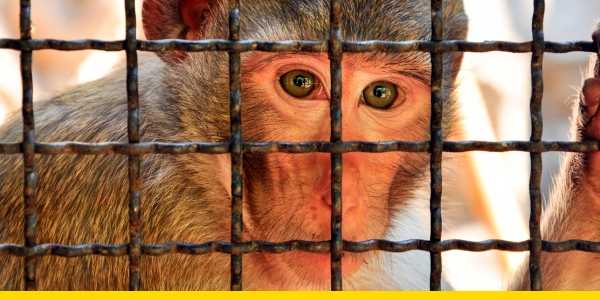
Summary of State Laws Relating to Private Possession of Exotic Animals
The sale and possession of exotic animals in the United States is regulated by a patchwork of federal, state, and local laws that generally vary by community and by animal. Born Free USA believes that wild animals belong in the wild, not in private homes as pets or in zoos and other such facilities, and strongly recommends against the purchase and possession of wild and exotic animals.
Below is a summary of state laws governing the possession of exotic animals. Laws vary from state to state on the type of regulations imposed and the specific animals regulated. This summary was last updated in June 2022 and may not reflect current state laws.
Please note: The animals listed within the below regulations are not a complete list of the animals regulated by the various states. The listed animals are merely a sampling from each state.
Protect wild animals from the pet trade and other exploitation by making a donation to Born Free USA!
Legend:
B = Ban on private ownership of exotic animals — non-domesticated felines, wolves, bears, reptiles, non-human primates
B* = Partial ban on private ownership of exotic animals — allows ownership of some exotic animals but precludes ownership of the animals listed
L = Requires the “owner” of the exotic animal to obtain a license or permit or to register the animal with state or local authorities to privately possess the animal (excludes states only requiring import permits)
N = The state does not require the “owner” to obtain a license or permit to possess the animal within the state, but may regulate some aspect thereof (i.e. entry permit, veterinary certificate, etc.)
O = No statute or regulation governing this issue
Alabama
Category: B
Ala. Admin. Code r. 220-2-.26
Summary of Law: No person, firm, corporation, partnership, or association shall possess, sell, offer for sale, import, bring, release, or cause to be brought or imported into AL any of the following live fish or animals: any Catfish; Piranha; Giant African Snail; any species of venomous reptile which has never naturally existed in the wild of AL; any species of bird, mammal, reptile or amphibian listed as injurious wildlife under the Lacey Act (18 U.S. Code § 42); any species of Mongoose; Jack Rabbits or any other species of wild rabbit or hare; or any member of the family Cervidae (including but not limited to deer, elk, moose, caribou), species of coyote, fox, raccoon, skunk, wild rodent, strain of wild turkey, black bear, mountain lion, bobcat, Pronghorn Antelope, any nondomestic member of the families Suidae (pigs), Tayassuidae (peccaries), or Bovidae (except bison).
It shall be unlawful for any person to have in possession any live, protected wild bird or wild animal or live embryo or eggs of these protected wild birds or animals.
Alaska
Category: L
Alaska Admin. Code tit. 5, § 92.029; Alaska Stat. § 16.05.940
Summary of Law: No person may possess, import, release, export, or assist in importing, releasing, or exporting, live game, unless the person holds a possession permit issued by the department. The department may not issue a permit for the capture, possession, import, or export of any game animal, including a hybrid, for use as a pet. A “game” animal is any species of bird, reptile, and mammal, including feral domestic animals, found or introduced in the state, excepting domestic birds and mammals. This includes all animals, including exotics, not listed as domestic under Alaska Admin. Code tit. 5 § 92.029.
The propagation of chimpanzees is prohibited in this state. (Alaska Admin. Code tit. 5 § 92.029c)
A person may not import, possess, transport, or release in the state live venomous reptiles or their eggs, or live venomous insects or their eggs, except in accordance with the terms of a permit, which may be granted only if the applicant demonstrates a valid educational purpose for seeking the permit. (§ 16.05.921)
It is generally unlawful, without a permit issued by the department, for a person to possess, transport, sell, advertise or otherwise offer for sale, purchase, or offer to purchase a live wolf or wolf hybrid, or wild cat or wild cat hybrid.
Arizona
Category: L
Summary of Law:
Ariz. Rev. Stat. Ann § 17-306:
No person shall import or transport into this state or sell, trade, or release within this state or have in the person’s possession any live wildlife except as authorized by the commission or as defined in title 3, chapter 16, whereby the possessor may obtain a special license due to education and research needs.
Ariz. Admin. Code § R12-4-406:
The following mammals are considered restricted wildlife: most Bovidae (antelope, bison, buffalo, gazelles, goats, oxen, and sheep) with some exceptions, the family Cervidae (deer, elk, moose), the family Tayassuidae (peccaries), all species of the order Carnivora (bears, foxes, ocelot, raccoons, skunks, wolves, and weasels), bats, opossums, hedgehogs, wild rabbits, all nonhuman primates (chimpanzees, gorillas, orangutans, macaques, and spider monkeys), all wild rodents (beavers, porcupines, gophers, prairie dogs, squirrels), moles, all species of the order Xenarthra (anteaters, armadillos, sloths)
The following birds, reptiles, amphibians, and fish are considered restricted live wildlife: quail, wild turkey, all species of the order Crocodilia (alligators, crocodiles), all species of the family Elapidae (cobras, coral snakes, mambas, sea snakes), all species from the family Helodermatidae (Gila monster, Mexican beaded lizard), all species from the family Viperidae (vipers, rattlesnakes), snapping turtles, desert tortoise, giant/marine toads, bullfrogs, leopard frogs, clawed frogs, sturgeon, tetra, sharks, sunfish, catfish, electric eels, tiger fish, salmon and trout, tilapia.
A person is prohibited from possessing a nonhuman primate, unless authorized under a special license or lawful exemption. Possessor must comply with all guidelines put forth in R12-4-426. (Ariz. Admin. Code § R12-4-426)
Arkansas
Category: B*
Ark. Code Ann. § 20-19-502, -602
Summary of Law: It is unlawful for a person to own, possess, breed, or transfer possession of a large carnivore, meaning any individual of the species of animals that are inherently dangerous to humans (ie. lions, tigers, bears). Also, a person shall not import, possess, sell, or breed the following primates: ape, baboon, macaque.
It is also unlawful to hunt or possess alligator or elk without first obtaining the required permit
California
Category: B
Cal. Fish & Game Code § 2118, Cal Code of Regs. Tit 14 § 650
Summary of Law: it is unlawful to import, transport, possess, or release alive into this state, except under a revocable nontransferable permit and the regulations pertaining thereto, any wild animal of the following species: cuckoos, larks, crows, jays, magpies, thrushes, starlings, sparrows, weavers, finches; all primates, sloths, anteaters, armadillos, all marsupials, hedgehogs, moles, all lemurs, bats, platypuses, all wild rabbits and hares, all rodents except those domesticated, all carnivores besides domestic cats and dogs, all elephants, all manatees, all wild species of the order Perissodactyla (horses, zebras, rhinos, etc.) besides domesticated horses, all species of the order Artiodactyla (swine, peccaries, camels, deer, elk) with exceptions; wild frogs, toads, salamanders, herring, snakes, lizards, turtles, alligators, slugs and snails.
Cal. Code of Regs. Tit. 14 § 650: it shall be unlawful for any person/entity to take and/or possess live or dead wildlife for scientific, educational, and/or propagation purposes except as authorized by a permit issued by the department
Colorado
Category: B
Colo. Rev. Stat. Ann § 33-6-109, Colo. Admin. Code § 406-0:008, 406-13:1301
Summary of Law: No person shall, at any time, have in possession or under control any wildlife caught, taken, or killed outside of this state which were caught, taken, or killed at a time, in a manner, or for a purpose, or in any other respect which is prohibited by the laws of the state in which the same were caught, taken, or killed.
The possession of the following terrestrial wildlife species or viable gametes (eggs and sperm) is prohibited, unless authorized by the Division: including but not limited to exotic sheep and goats, wildebeest, boars, peccaries, all species and hybrids of wild species in the family Cervidae (ie. caribou, deer, moose), raccoon, grouse, skunks, hedgehogs, opossums, squirrels, parakeets, porcupines, prairie dogs, all species and hybrids of non-human primates.
Connecticut
Category: B
Conn. Gen. Stat. § 26-40a., Conn. Agencies Regs. § 26-55-6
Summary of Law: No person (excepting parks, zoos, aquariums, museums, laboratories, etc.) shall possess a potentially dangerous animal. The following wildlife, or any hybrid thereof, shall be considered potentially dangerous animals: felidae (ie. lion, leopard, cheetah, jaguar, bobcat, ocelot, lynx, etc.), canidae (ie. wolf, coyote), Ursidae (ie. black bear, grizzly bear, brown bear), Hominidae (ie. gorilla, chimpanzee, orangutan). No person (except parks, zoos, aquariums, museums, research facilities, etc.) shall import or possess the following: including but not limited to elephants, wolverines, hyaenas, kangaroos, wallabies, armadillos, skunks, raccoons, hippopotamus, peccaries, bats, rhinoceroses, wild rodents, crocodiles or alligators, cobras, coral snakes, mambas, vipers, rattlesnakes, copperheads, cottonmouths, pythons, anacondas, Gila monsters, Komodo dragons. Furthermore, no person shall import or possess any endangered species unless such person has been issued a permit.
Delaware
Category: L
Del. Code Ann. Tit. 3, § 7201, 3 Del. Admin. Code § 903, 906, 7 Del. Admin. Code § 3900
Summary of Law: It shall be unlawful for any person to collect, possess, import, export, buy, sell, or offer for sale any native wildlife species for commercial purposes. No person shall bring into this state, possess, sell, or exhibit any live wild mammal or hybrid of a wild mammal or live reptile not native to Delaware without first securing a permit. No person shall bring into this state, possess, sell, or exhibit any poisonous snake not native to or generally found in Delaware where the venom of such snake poses a risk of serious injury or death to a human, and no permit for such snake shall be issued by the Dept. of Agriculture.
Florida
Category: L
Fla. Stat. § 379.372, 379.3762; Fla. Admin. Code Ann. r. 68a-6.002
Summary of Law: No person, party, firm, association, or corporation shall capture, keep, possess, or exhibit any poisonous or venomous reptile without first having obtained a special permit. Persons who hold pre-July 1, 2010 permits for these species may legally possess the species for the remainder of the reptile’s life. Further, It is unlawful for any person to possess any Class I Wildlife, whether native to FL or not, until she or he has obtained a permit from the Fish and Wildlife Conservation Commission. Class I Wildlife includes (but is not limited to) chimpanzees, gorillas, orangutans, baboons, leopards, tigers, lions, bears, rhinoceroses, elephants, hippopotamuses, crocodiles, Komodo dragons, hyenas, cougars and panthers, cheetahs. Possession of Class II Wildlife, wildlife which is considered to present a threat to human safety, requires a yearly $140 permit. Class II Wildlife includes smaller monkeys like howlers, lynx, bobcats, ocelots, wolves, coyotes, wolverines, badgers, alligators, ostrich, giraffe, antelope. All other wildlife, that classified as Class III Wildlife, requires a no-cost permit.
Georgia
Category: L
Ga. Code Ann. § 27-5-4, § 27-5-5
Summary of Law: It shall be unlawful for any person to import, transport, transfer, sell, purchase, or possess any wild animal listed below without first obtaining a wild animal license from the department. These licenses will only be issued to persons engaged in wholesale or retail wild animal business or persons exhibiting wild animals to the public. The wild animals requiring such license are considered inherently dangerous to humans and are as follows (including but not limited to): all species of Marsupialia (ie. kangaroos, wallabies); all primate species; carnivora (ie. wolves, bears, hyenas, lions, tigers, leopards, jaguars, cheetahs, cougars, wolverines, etc.); all species of elephants and rhinoceroses; hippopotamuses; crocodiles and alligators; cobras, coral snakes, vipers, Gila monsters.
Hawaii
Category: B
Haw. Admin. Rules § 13-124-3, § 4-71-6
Summary of Law: with respect to indigenous wildlife, no person shall catch, possess, injure, kill, destroy, sell, offer for sale, or transport any such species. The introduction into Hawaii of live animals or live non-domestic animals is prohibited. Prohibited exotic species include, but are not limited to, jellyfish, octopus, salamanders, all frogs and snakes, Gila monsters, eels, piranhas, catfish, bats, foxes, wild rabbits and hares. Much wildlife is restricted for purposes approved by the board such as research or exhibition in government zoos or aquariums.
Idaho
Category: L
Idaho Code Ann. § 25-3903, § 36-502; Idaho Admin. Code § 13.01.10.200, 02.04.27.100
Summary of Law: No person shall possess, transport, or ship in any manner any wildlife, which is defined as any form of animal life, native or exotic, generally living in a state of nature, without obtaining a captive wildlife permit for each animal. No person may possess a deleterious exotic animal in the state, unless such person obtains a possession permit issued by the Administrator, requiring accredited facilities and an exhibitor’s license.
Illinois
Category: B
Ill Stat. Ann. § 520, 10/3
Summary of Law: it is unlawful for any person to possess, take, transport, sell, offer for sale, give, or otherwise dispose of any animal of any animal species which occurs on the Illinois List, the state’s list of endangered and protected species.
Indiana
Category: L
Indiana Admin. Code § 312 IAC 9-11-6, -7, -8, § 312 IAC 9-3-18.5
Summary of Law: Permits are required for classes I-III of wild animals. Class III wild animals are those that present real or potential threats to human safety and include wolves, bears, wild cats, venomous reptiles and crocodilians that are at least 5 feet long. Class II wild animals are those that may pose a threat to human safety and include, but is not limited to, beavers, coyotes, foxes, minks and muskrats, opossums, raccoons, skunks, weasels, and smaller wild cats. Class I wild animals are those that are not threats to public or personal safety and include rabbits and squirrels. Furthermore, an individual must not take any exotic mammal including, but not limited to, sloths, camels, llamas, elephants, monkeys and primates, wild horses and zebras, kangaroos and wallabies, giraffes, rhinoceroses, bears, anteaters, etc.
Iowa
Category: B
Iowa Code Ann. § 717F.1, .3, .4
Summary of Law: except as otherwise provided in the chapter, a person shall not own or possess a dangerous wild animal. A “dangerous wild animal” includes but is not limited to any of the following: wolves, coyotes, hyenas, lions, tigers, cougars, cheetahs, bears, rhinoceroses, elephants, primates, alligators and crocodiles, Gila monsters, vipers, rattlesnakes, cottonmouths, pythons and anacondas, boars.
Kansas
Category: B
Kansas Stat. Ann. § 32-1301, -1302
Summary of Law: it is unlawful for a person to possess, slaughter, sell, purchase, or otherwise acquire a dangerous regulated animal. A “dangerous regulated animal” means lions, tigers, leopards, jaguars, cheetahs, mountain lions, bears, and all non-native venomous snakes. Wildlife sanctuaries are exempted.
Kentucky
Category: B
301 Kar 2:082; Kansas Revised Statutes Annotated § 65.877
Summary of Law: A person shall not import or possess the following species of inherently dangerous wildlife: alligators; buffalo; bears; cheetah; crocodiles; elephants; Gila monsters; hippopotamus; honey badgers; hyenas; all nonhuman primates; rhinoceroses; leopards; wolverines; venomous exotic snakes of the families Viperidae, Atractaspididae, Elapidae, and Colubridae; wolverines. If a person possessed an inherently dangerous exotic animal prior to July 2005, he or she may keep the animal but cannot possess any new animal nor can he or she breed his or her current animals.
Louisiana
Category: B
La. Admin. Code. tit. 76, Pt V, § 115, § 701
Summary of Law: It shall be unlawful to import into, possess, purchase, or sell any of the following species of live wild quadrupeds, big exotic cats, or non-human primates: black, grizzly, and polar bears; red and gray wolves; all non-human primates; tigers, lions, leopards, jaguars, cheetahs, cougars, mountain lions. Further, no person shall take, possess, purchase, or sell alligators or their eggs. individuals who possessed a nonhuman primate prior to the effective date of the regulation or a big cat (only one) prior to august 15, 2006 are “grandfathered” in as long as the individuals obtain a permit.
Maine
Category: L
09-137 Maine Admin. Code Ch. 7, § 7.06, -.18
Summary of Law: Category I Restricted species include most wild animals and require a permit before they can be possessed. These species include, but are not limited to: ducks, geese, swans, crows, flamingos, toucans, eagles, hawks, owls squirrels, sloths, porcupines, prairie dogs, armadillos, beavers, deer, elephants, zebras, wild horses, wild cats, giraffes, hippos, hyenas, kangaroos, wallabies, badgers, otters, walruses, seals, rhinos, wild pigs, whales, dolphins, bats, all primates, cobras, beaded lizards, vipers, crocodiles and alligators, pythons, etc.
Maryland
Category: B
MD Code, Crim Law § 10-621, § 10-902(a)
Summary of Law: a person may not import into the state, offer for sale, trade, barter, possess, breed, or exchange a live: fox, skunk, raccoon, bear, alligator, crocodile, wild cat, wild dog, nonhuman primate (lemur, monkey, chimpanzee, gorilla, orangutan, etc.), poisonous snakes in the families Hydrophidae, Elapidae, Viperidae, or Crotolidae. Any person desiring to possess, import, export, breed, raise, protect, rehabilitate, hunt, kill, trap, capture, purchase, or sell any wildlife native to MD, shall first obtain a permit or license from the Department. Persons possessing one of the listed animals prior to May 31, 2006 may continue to keep the animal as long as the person provides written notification to the local animal control authority on or before august 1, 2006 of said possession.
Protect wild animals from the pet trade and other exploitation by making a donation to Born Free USA!
Massachusetts
Category: B
Code of Mass. Regs. Tit. 321 § 2.02, -.12, -.15, § 9.01, § 10.04; Mass. Gen. Laws Ann. ch 131, § 23, 25
Summary of Law: No person may take, possess, transport, export, process, sell or offer for sale, buy or offer to buy any animal on the state or federal endangered species list. A license to possess as a pet a bird, mammal, fish, reptile, or amphibian owned prior to January 1, 1974 shall, provided that any potentially injurious animal is property confined, be granted at any time. A license to possess a bird, mammal, reptile, or amphibian may be granted to any individual. Animals on the exempt species list may be possessed without a license. The following species are prohibited without a permit: carp, piranha, catfish, all venomous snakes; Gila monsters and beaded lizards.
It is unlawful for any person to import, possess, maintain, propagate, or have custody of any animal without a valid license. Any animal means any undomesticated bird, mammal, reptile, or amphibian.
Michigan
Category: B
Michigan Compiled Laws Ann. § 287.731, -.1102, -.1103
Summary of Law: a person shall not own or possess a large carnivore, including but not limited to: lions, leopards, jaguars, tigers, cougars, panthers, cheetahs, and bears, or any of their hybrids. Further, a person shall not possess a wolf-dog cross.
Minnesota
Category: B
Minn. Stat. Ann. § 346.155
Summary of Law: it is unlawful for a person to possess a regulated animal. Regulated animals include all members of the Felidae family (ie. lions, tigers, cougars, leopards, cheetahs, etc.) besides domestic cats; bears; all nonhuman primates (ie. lemurs, monkeys, chimpanzees, gorillas, orangutans, etc.); and any hybrid or cross between these species.
Mississippi
Category: L
Miss. Code Ann. § 49-8-5, -7
Summary of Law: it is unlawful for a person to import, sell, purchase, or possess any wild animal classified as inherently dangerous unless that person holds a permit. The following wild animals are classed as animals inherently dangerous to humans: nonhuman primates, wolves, wolverines, hyenas, lions, tigers, leopards, jaguars, cheetahs, elephants, rhinoceroses, hippopotamuses, etc.
Missouri
Category: B
Vernon’s Ann. Missouri Stat. § 252.190, 578.023, -.602; Mo. Code of State Regs. Tit. 3 § 10-4.110
Summary of Law: A person commits the offense of keeping a dangerous wild animal if he or she keeps any animal such as a lion, tiger, leopard, jaguar, cheetah, mountain lion, bobcat, hyena, wolf, bear, nonhuman primate, coyote, any deadly, dangerous or poisonous reptile, in any place other than a properly maintained zoological park, circus, scientific, or educational institution, research lab, veterinary hospital, or animal refuse unless such person has registered the animal with the local law enforcement agency in which the animal is kept. As of January 1, 2012, pursuant to the Large Carnivore Act, no person shall own or possess a large carnivore, including any wild cats or bears. Further, no bird, fish, crayfish, mussel, amphibian, reptile, mammal, or other form of wildlife shall be molested, pursued, taken, hunted, trapped, poisoned, killed, transported, possessed, imported, or exported except as specifically permitted by Missouri regulations. Any person possessing, breeding, or transporting a large carnivore on or after January 1, 2012 shall obtain a permit from the division.
Montana
Category: B
Mont. Admin. R. 12.6.2201, -.2215
Summary of Law: “Prohibited species” may not be possessed, sold, purchased, exchanged, or transported and the classification includes (but is not limited to) carp and catfish; night, owl, howlers, and spider monkeys; marmosets and tamarins; new world primates; old world monkeys; hyenas; gibbons; apes; flying squirrels; pythons, cobras, anacondas, mambas, and vipers; and quails. Further, a person may not operate a wild animal menagerie without obtaining a permit.
Nebraska
Category: B
Neb. Rev. Stat. § 37-477; Neb. Admin. R. & Regs. Tit. 163, Ch. 4, § 008
Summary of Law: No person shall keep in captivity in this state any wild birds, any wild mammals, any nongame wildlife in need of conservation. No person shall keep in captivity in this state any wolf, any skunk, or any member of the families Felidae (wild cats) and Ursidae (bears) unless the animal was in possession prior to March 1, 1986. The following, including but not limited to, may be kept under authority of a permit: badgers, beavers, bobcats, crows, deer, red and gray foxes, lynx, minks and muskrats, opossums, raccoons, otters, gray and flying squirrels, swans, and weasels.
Nevada
Category: B
Nev. Admin. Code § 503.110
Summary of Law: the importation, transportation, or possession of the following species of life wildlife, including embryos or gametes, is prohibited: including but not limited to stingray, shark, piranhas, carp, alligators and crocodiles, coral snakes, cobras, mambas, vipers, snapping turtles, Gila monsters, beaded lizards, clawed frogs and giant toads, deer, elk, moose and caribou, mongooses and meerkats, bats, coyote, foxes, raccoons, skunks, wild pigs and hogs, etc.
New Hampshire
Category: L
N.H. Rev. Stat. § 207:14; N.H. Code Admin. R. Fis 804.03, -.05
Summary of Law: Any person possessing a wolf hybrid shall keep accurate licensing and vaccination records. No person shall import, possess, sell, exhibit, or release any live marine species or wildlife without first obtaining a permit. No person shall be issued a permit to possess wildlife designated as prohibited, such as catfish and carp. A permit to possess wildlife shall be required for all of the following species, including hybrids, including but not limited to: wild toads and salamanders, alligators and crocodiles, all venomous reptiles, wild turtles, armadillos, badgers, beavers, black and grizzly bears, wild boards, bobcats, cougars, coyotes, lynx, deer, elephants, elk, giraffe, hyenas, wild hares, kangaroos, leopards and lions, jaguars, mink and mongoose, muskrat and otter, prairie dogs, primates (including chimpanzee, gorilla, orangutan, baboons, spider monkeys, capuchins, marmoset and tamarins, etc.), raccoons, skunks, squirrels, voles, wallabies, weasels, wolverines, wolves, zebra, etc.
New Jersey
Category: B
N.J.S.A. 23:2A-6; N.J. Admin. Code § 7:25-4.3, -4.8, -4.9
Summary of Law: No person shall take, possess, transport, import, export, process, sell or offer for sale any species of wildlife appearing on endangered species lists. Further, exotic species and nongame species requiring a permit for possession include, but are not limited to, the following: parrots, ferrets, hedgehogs, pythons, boas, and other snakes. A permit for potentially dangerous animals, including but not limited to nonhuman primates (ie. apes, baboons), nondomestic carnivores (ie. bears, wild cats), venomous reptiles and snakes (ie. Gila monsters, coral snakes, cobras, vipers), crocodiles and alligators, and rodents (ie. prairie dogs, squirrels), may be issued only after a clear showing that certain criteria have been met; however, potentially dangerous species shall not be kept as pets.
New Mexico
Category: B
N. M. S. A. § 77-18-1
Summary of Law: the sale, purchase, trade, and possession w/ intent to keep as a pet of any subhuman primate, skunk, raccoon, fox or other sylvatic carnivore may be regulated by regulation of the health and environment department for the protection of public health and safety.
New York
Category: L
McKinney’s Consolidated Laws of N.Y. Ann. § 11-0512, -0103, -0511; 6 NYCRR 182.7
Summary of Law: it shall be prohibited for any person to knowingly possess or import any wild animal for use as a pet in NY state unless a license is obtained prior to possession. “Wild animals” include nonhuman primates, all wild cats, all wild dogs, bears, all venomous reptiles, pythons, anacondas, Komodo dragons, crocodiles, alligators, foxes, skunks, raccoons, and endangered species.
North Carolina
Category: N
N.C.G.S.A. § 153A-131, 160A-187; N.C. Admin. Code tit. 2, r. 52B.0212
Summary of Law: a county or city may, by ordinance, regulate, restrict, or prohibit the possession of dangerous animals. Further, a person shall obtain a permit from the State Veterinarian before importing any of the following animals into the state: skunk; fox; raccoon; ringtail; bobcat, lynx, cougars, or jaguars; coyote; martens; and brushtail possums.
Ohio
Category: B
Ohio R.C. § 935.02, -.01;
Summary of Law: no person shall possess a dangerous wild animal on or after January 1, 2014. “Dangerous wild animals” include hyenas, gray wolves, lions, tigers, jaguars, leopards, cheetahs, lynxes, cougars, bears, elephants, rhinos, hippos, African wild dogs, Komodo dragons, alligators and crocodiles, and nonhuman primates besides lemurs.
Oklahoma
Category: L
Okl. St. Ann. tit. 29 § 4-107
Summary of Law: No person may possess or raise wildlife for commercial purposes without having first obtained a permit. Regardless to whether the possession is actually for “commercial purposes,” all persons owning these animals as “pets” must obtain this particular permit.
Oregon
Category: L
O.R.S. § 609.341, -.351; OAR 635-056-0050
Summary of Law: a person may not keep an exotic animal in this state unless the person possesses a valid state dept. of ag. Permit for that animal issued prior to January 1, 2010. “Exotic animal” means any nondomestic, wild cat; any nonhuman primate; any non-wolf wild dogs; any bear, except the black bear; or any alligator or crocodile. Further, live wildlife, as listed, may not be imported, possessed, sold, purchased, exchanged, or transported in the state: including but not limited to wild boar, wildebeest, mongooses, otters, bats, armadillo, wild hares and jackrabbits, squirrels and flying squirrels, prairie dogs, salamanders and newts, toads and wild frogs, snapping and other wild turtles, copperheads and cottonmouths, cobras, vipers, rattlesnakes, piranhas, catfish, carp, etc.
Pennsylvania
Category: L
34 Pa.C.S.A. § 2963, 2961; 58 Pa. Code § 137.1
Summary of Law: It is unlawful for any person to possess, purchase, or receive exotic wildlife, without first securing a permit to possess exotic wildlife. “Exotic wildlife” includes, but is not limited to, all bears, coyotes, lions, tigers, leopards, jaguars, cheetahs, cougars, wolves, and any crossbreed of these animals, which have similar characteristics in appearance or features. Further, it is unlawful for a person to import, possess, sell, offer for sale, or release the following wild animals or crossbreeds or hybrids, including but not limited to: nondomestic cats, coyotes, red and gray foxes, wolves, bears, raccoons, skunks, all nonhuman primates, any threatened or endangered species, etc.
Rhode Island
Category: L
R. I. Gen. Laws § 4-18-3
Summary of Laws: no person shall import into, receive, or possess in this state without first obtaining a permit from the dept., wild animals of the following orders, families, and genera: primates, carnivores, amphibia, reptilia, Canidae, and insecta.
South Carolina
Category: B
Code of Laws of S.C. 1976 § 46-2-30
Summary of Law: it is unlawful for a person to import into, possess, keep, purchase, have custody or control of, breed, or sell w/in this state, by any means, a large wild cat, non-native bear, or great ape. A person in legal possession of any of these prior to January 1, 2018, and who is the legal possessor of the animal, may keep possession of the animal for the remainder of the animal’s life subject to proper registration of the animal, maintenance of veterinary records, and compliance with other conditions.
South Dakota
Category: L
Admin. Rules of S. D. § 12:68:18:03
Summary of Law: a permit is required to possess any nondomestic mammal of any of its hybrids as follows: felidae (wild cats), Canidae (ie. coyotes, foxes), Ursidae (bears), Mustelidae (ie. otters, badgers, ferrets, weasels, minks, etc.), Hyaenidae (hyenas); of the order artiodactyla (ie. hippos, antelopes, deer, giraffes, etc.); of the order perissodactyla (families tapiridae, rhinocerotidae); of the order proboscidea (families African and Asian elephants); of the order primates.
Tennessee
Category: B
Tenn. Code Ann. § 70-4-401, -403,
Summary of Law: it is unlawful for any person to possess, transport, import, export, buy, sell, barter, propagate, or transfer any wildlife, whether indigenous to this state or not. Further, no person shall possess Class I or Class II wildlife without having documentary evidence showing the name and address of the supplier of such wildlife and date of acquisition. Persons legally possessing Class I wildlife prior to June 25, 1991, shall obtain annually a personal possession permit to keep such wildlife. Class I wildlife includes all species inherently dangerous to humans and may only be possessed by zoos, circuses, and commercial propagators. Class I wildlife includes primates like gorillas, orangutans, chimpanzees, etc.; carnivores like wolves, bears, lions, tigers, leopards, jaguars, cheetahs, cougars, etc.; all elephants; all rhinos; all hippos and African buffalos; all crocodiles and alligators; all poisonous species of snakes and amphibians.
Texas
Category: L
Tex. Health & Safety Code Ann. § 822.101-.116
Summary of Law: No person may possess a dangerous wild animal without first obtaining a certificate of registration. Dangerous wild animals are defined as lions, tigers, ocelots, cougars, leopards, cheetahs, jaguars, bobcats, lynxes, servals, caracals, hyenas, bears, coyotes, jackals, baboons, chimpanzees, orangutans, gorillas, or any hybrids of these animals.
Utah
Category: B
Utah Admin. R. § 657-3-17, -24, -25
Summary of Law: A person may not possess live zoological animals that are classified as prohibited. Prohibited animals include, but are not limited to, the following families: Ursidae (bears), Canidae (all species), Felidae (all species except non-domesticated cats), Mustelidae (all species), Non-human primates, and certain species of reptiles, etc. However, in <u>rare</u> circumstances a person may possess these animals as a “pet” if the person obtains a certificate of registration from the Wildlife Board. Generally, exhibitors and educational and scientific facilities only obtain these registrations. A certificate of registration is not required for non-controlled species which alligators and crocodiles fall under.
Vermont
Vt. Admin. Code 16-4-116:4.0
Summary of Law: it is unlawful for any person to bring into or possess in the state any live wild animal unless the person obtains from the commissioner a permit to do so. Wild animals include mammals, birds, amphibians, and reptiles, excluding those defined as domestic.
Virginia
4 VAC 15-30-10, -40
Category: B*
Summary of Law: No person may possess nonnative exotic animals that are classed as predatory or undesirable as a “pet.” Nonnative exotic animals include, but are not limited to: bears, wolves, coyotes, weasels, badgers, hyenas, all species of non-domesticated cats, alligators, and crocodiles. Persons may possess these animals if they are a licensed exhibitor, i.e. commercial, educational or scientific uses. However, there are no state requirements for a person possessing non-human primates.
Washington
Category: B
RCWA 16.30.030
Summary of Law: a person shall not own, possess, keep, harbor, bring into the state, breed, or have custody or control of a potentially dangerous wild animals except for a person in legal possession of a potentially dangerous wild animal prior to July 22, 2007. A “potentially dangerous wild animal” means one of the following types of animals, whether bred in the wild or in captivity, and any hybrid thereof: wild cats such as lions, tigers, jaguars, cheetahs, leopards, etc.; wolves, excluding wolf-hybrids; all bears; hyenas; rhinos; all nonhuman primate species; all elephants; snakes such as cobras, mambas, coral snakes, rattlesnakes, cottonmouths, etc.; and all crocodiles and alligators.
West Virginia
Category: B
W. Va. Code § 19-34-4, -2
Summary of Law: a person may not possess a dangerous wild animal. The board may issue a permit for the possession of a dangerous wild animal if the applicant was in legal possession of the animal prior to June 4, 2014. A “dangerous wild animal” means a mammal, bird, reptile, amphibian, or aquatic animal, including hybrids, that is dangerous to humans, other animals, or the environment due to its inherent nature and capability to do significant harm.
Wisconsin
Category: L
W.S.A § 169.04, -.11
Summary of Law: no person may possess any live wild animal unless the person holds a license or other approval to possess. Further, no person may possess, take, propagate, sell, purchase, transfer, exhibit, or rehabilitate a live harmful wild animal unless specifically authorized to do so by the department. Harmful wild animals include cougars, bears, and wild and feral swine.
Wyoming
Category: B
Wyoming Stat. Ann. § 23-1-103, -101
Summary of Law: There shall be no private ownership of live animal as classified in this act as big or trophy game animals or of any wolf or wolf hybrid. “Big game animal” means antelope, bighorn sheep, deer, elk, moose, or mountain goat. “Trophy game animal” means black bear, grizzly bear, or mountain lions.
Legend:
B = Ban on private ownership of exotic animals — non-domesticated felines, wolves, bears, reptiles, non-human primates
B* = Partial ban on private ownership of exotic animals — allows ownership of some exotic animals but precludes ownership of the animals listed
L = Requires the “owner” of the exotic animal to obtain a license or permit or to register the animal with state or local authorities to privately possess the animal (excludes states only requiring import permits)
N = The state does not require the “owner” to obtain a license or permit to possess the animal within the state, but may regulate some aspect thereof (i.e. entry permit, veterinary certificate, etc.)
O = No statute or regulation governing this issue