This blog post was written for Born Free USA by Michael Philippe Bessike Balinga, Executive Director of Earth Synergy Initiative, a partner of Born Free USA working across Africa to drive inclusive and sustainable environmental solutions.
Five Editions and Counting
Sea turtle conservationists from across Ghana met again at the University of Ghana, Legon, on August 27-28, 2026. The organizers called it the fifth edition of a gathering that began in 2018 and has since expanded to include Ghana National Sea Turtle Week and National Sea Turtle Day.
With support from Born Free USA, we are working with partners in Shama District in Ghana’s Western Region to understand how plastic pollution is affecting coastal wildlife and habitats, including sea turtle nesting beaches and mangroves. We came to the conference with some early lessons from Shama, and left with new contacts, practical ideas and questions to take back to the field.
Sea Turtles and the Plastic Problem
Sea turtles are part of Ghana’s coastal ecosystems, but they also share the coast with people who depend on the sea for their livelihoods. Protecting them cannot be separated from the other pressures on the coast: bycatch, poaching, disturbance of nesting habitat, erosion, poorly managed waste and plastic pollution.
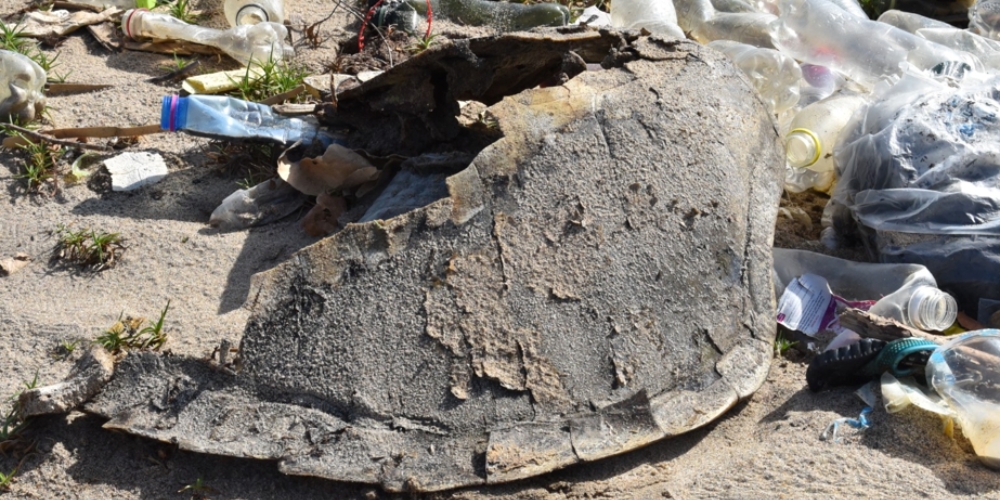
Plastic is one of the most visible of those pressures. A “quantitative analysis linking sea turtle mortality and plastic debris ingestion” published in Nature, found a 50% probability of mortality once an animal had 14 pieces of plastic in its gut. Ingestion of plastics is only one of the threats to sea turtle conservation worldwide. Plastic kept coming up in the discussions. Participants spoke about litter on nesting beaches, the risks to turtles and hatchlings, and the clean-ups organized by NGOs and communities. But people were also asking what happens before waste reaches the beach: how it is collected, whether it can be separated and recycled, what can replace some single-use plastics, and why so much waste keeps returning after a clean-up. As one participant put it, “Everybody’s doing cleanup but at the end of the day the waste comes again.”
What We Are Learning in Shama
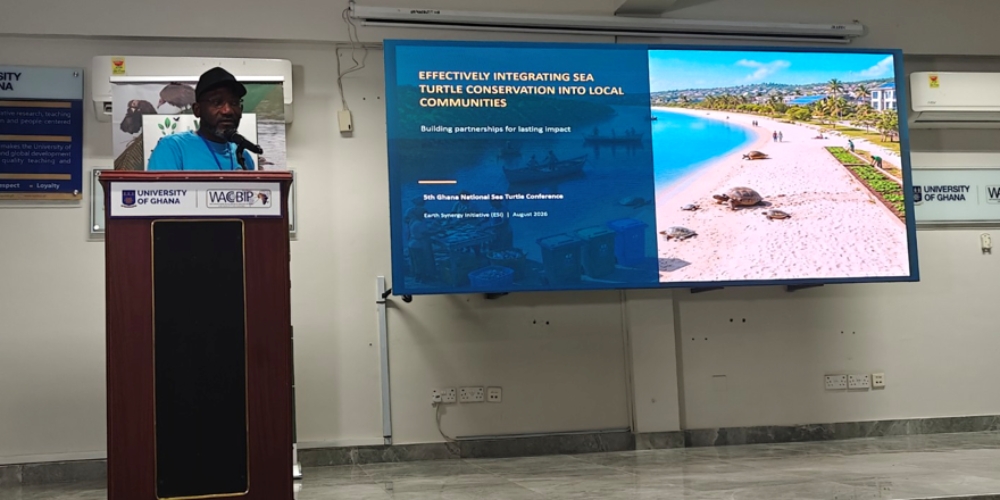
Our presentation was titled “Effectively Integrating Sea Turtle Conservation into Local Communities: Building Partnerships for Lasting Impact.” We argued that community participation has to mean more than awareness campaigns, providing labor for patrols, or asking people to follow the rules of a project designed somewhere else.
People are more likely to stay engaged when conservation makes sense in their own lives: when their knowledge and costs are recognized, when they have a say in decisions, and when protecting wildlife is connected to livelihoods and to the future they want for their coast.
This thinking was the basis for the Born Free USA-supported Plastic Pollution and Coastal Species Pilot, which ESI is implementing with the Integrated Action for Development Initiatives (IADI), alongside the Shama District Assembly, traditional authorities and communities. So far, the work has included a situational assessment, discussions across coastal communities, assessment of sea turtle habitat and threats, and the design of a community-based monitoring system.
The pilot sits alongside the Shama Regenerative Transition, implemented by ESI, IADI, Metabolic and Climate-KIC. The Born Free USA-supported work looks closely at sea turtles, nesting beaches, mangroves, plastics and community monitoring. The wider transition process brings in fisheries, livelihoods, waste, flooding, governance and finance. Looking at both together changes the question. Instead of asking only how to get communities to protect turtles, we can ask how to build a coastal future in which protecting turtles makes sense to the people who live there.
Working Together Matters
The need for better coordination also came through clearly. In his opening remarks, Wildlife Division Wetlands Coordinator Attah Kusi spoke openly about the agency’s limited staff and equipment, and asked NGOs and other partners to work more closely with the Wildlife Division to protect sea turtles along Ghana’s coast.
This has practical implications for project design. Communities cannot carry conservation on their own, but NGOs should not work around the public institutions that have the legal mandate for wildlife. Government, communities, researchers and civil-society organizations each bring something different. Donor support is most useful when it helps them work together rather than creating another stand-alone activity.
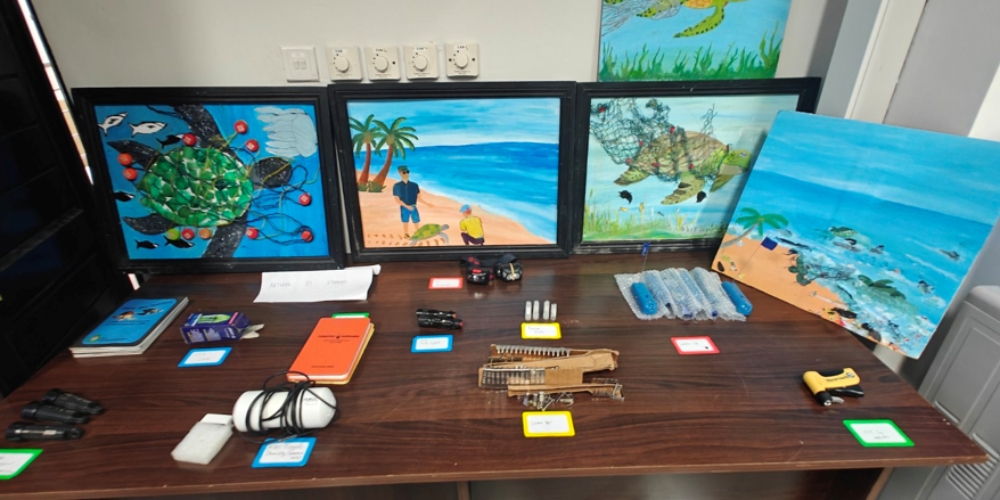
The conference makes that kind of exchange possible. People working only a few kilometers apart do not always know what others are doing. Here they could compare methods, share information and discuss possible collaboration. The practical sessions covered species identification, tracks, measurements, nesting activity, threats, field equipment and data collection. For our team, that was immediately relevant to the monitoring system we are putting together in Shama.
Keeping the Conference Going
The conference has also depended on people who were willing to keep it going. Dr Andrews Agyekumhene has been one of the main people behind it from the beginning.
At the first conference in 2018, Andrews was a Protected Area Manager with the Wildlife Division of Ghana’s Forestry Commission in Winneba, with responsibilities that included the Muni-Pomadze Ramsar Site and coastal conservation. He already had years of experience with sea turtle research, community conservation and fisheries bycatch. After completing his PhD in Integrated Coastal Zone Management, he joined the University of Ghana in November 2020 as a lecturer in the Department of Marine and Fisheries Sciences.
Moving from government to academia did not take Andrews away from work on the ground. He is also Executive Director of the Wildlife and Human Resources Organisation (WHRO), which works with coastal communities including Ningo-Prampram. Over the years he has kept bringing government officers, researchers, NGOs, communities, students and sea turtle specialists into the same conversation. In 2025 he served as President of the 43rd International Sea Turtle Symposium hosted in Accra.
For ESI, the connection is now very practical. Andrews is a technical adviser and consultant to the Born Free USA-supported pilot in Shama. His own path, from Wildlife Division manager to university lecturer, NGO leader and conference organizer, shows what can happen when someone keeps using each position to bring other people into the work. Keeping the conference alive through changes of institution, limited resources and the COVID-19 interruption has taken persistence, and that deserves to be recognized.
Beyond the Conference
What matters now is what happens after the conference. In Shama, we have to turn what we are learning into better monitoring, stronger partnerships and practical action on plastic pollution and coastal habitat.
We also proposed using the conference network to develop a participatory State of Knowledge Report on Sea Turtles in Ghana. A related task would be to go back to recommendations from earlier conferences and ask some fairly basic questions: What did we agree to do? What happened? What stalled? What should we concentrate on next?
Born Free USA’s support has given us the chance to test a locally led approach in Shama and bring the early experience into a national discussion. We now take what we learned at the conference back to Shama. If that exchange continues, a small pilot can help inform work beyond one district, while the national network can make the work in Shama better. For us, that is a worthwhile result and a good reason to keep the conversation going.
– Michael Philippe Bessike Balinga, Executive Director of Earth Synergy Initiative
Dear Reader,
We are a nonprofit committed to wildlife conservation, welfare, and rescue. Making resources free and widely distributed, like our news items, is an important part of our mission. If you found this article helpful, enjoyable, or enlightening, please donate to help keep these resources available, and Keep Wildlife In The Wild.
Thank You,
The Born Free USA Team
 Dear Reader,