One morning in 2018, I was standing in a small hotel conference room in Dakar, Senegal, getting ready for the first day of a week-long course for customs officials across the region. It was already hot and stuffy. I set out training manuals while I waited for Charles and some experts from the U.S. Fish and Wildlife Service to arrive. Charles is a dynamic wildlife law enforcement trainer with decades of experience. He worked with Born Free USA on many projects until his retirement a couple of years ago. I had never met the U.S. Fish and Wildlife Service experts before, but they were there to help with the training. And, they were bringing something special.
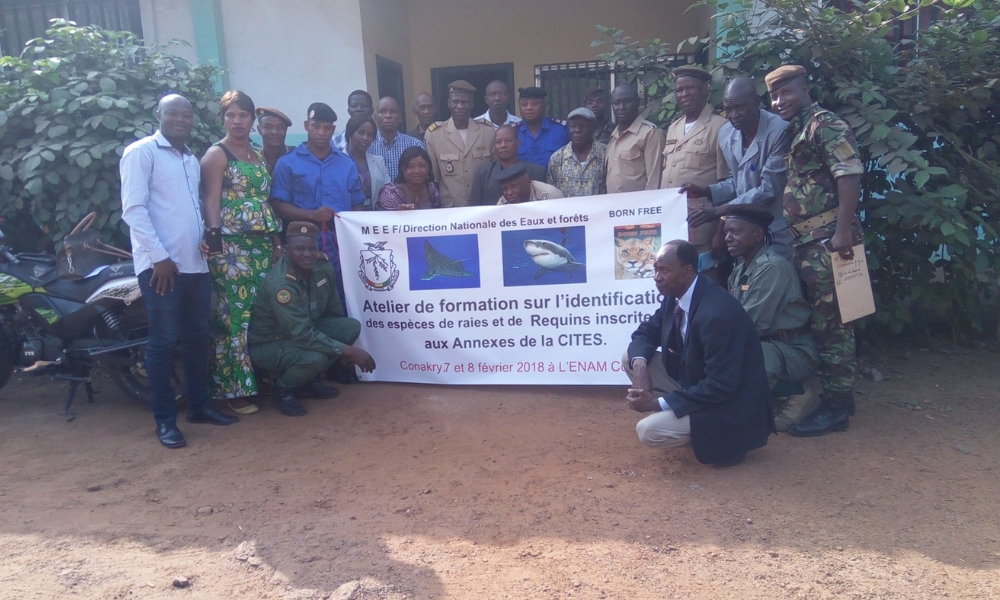
It’s rare to have access to physical specimens when training customs agents and border guards to recognize illegally trafficked wildlife. In many cases, traffickers slaughter the animals in the field or on boats, keeping the parts that command high prices in illegal markets while discarding the rest of the animal. Learning the difference between the fin of an endangered shark and the fin of a shark that is legal to export is very difficult to do when you’ve never seen or touched either. At Born Free USA, we don’t think any shark fins should be harvested, but we work with the laws we have even as we try to change those laws. (And you’ll read good news about that below!)
To help wildlife law enforcement identify endangered species, Born Free USA has produced numerous high-quality ID Guides over the past decade. These are widely used across West Africa by customs agents, park rangers, and border guards. These guides have aided in many seizures of illegally trafficked wildlife and wildlife parts. But on that hot day in Dakar, as I waited for the participants to arrive, the U.S. Fish and Wildlife Service arrived with a cooler filled with shark fins, fish bladders, and sea turtle parts they’d seized from wildlife traffickers. This was an opportunity for a rare hands-on experience, especially because this was a train-the-trainer course, and the participants would take what they learned and teach it to customs agents in their own countries. This was a chance to make it real.
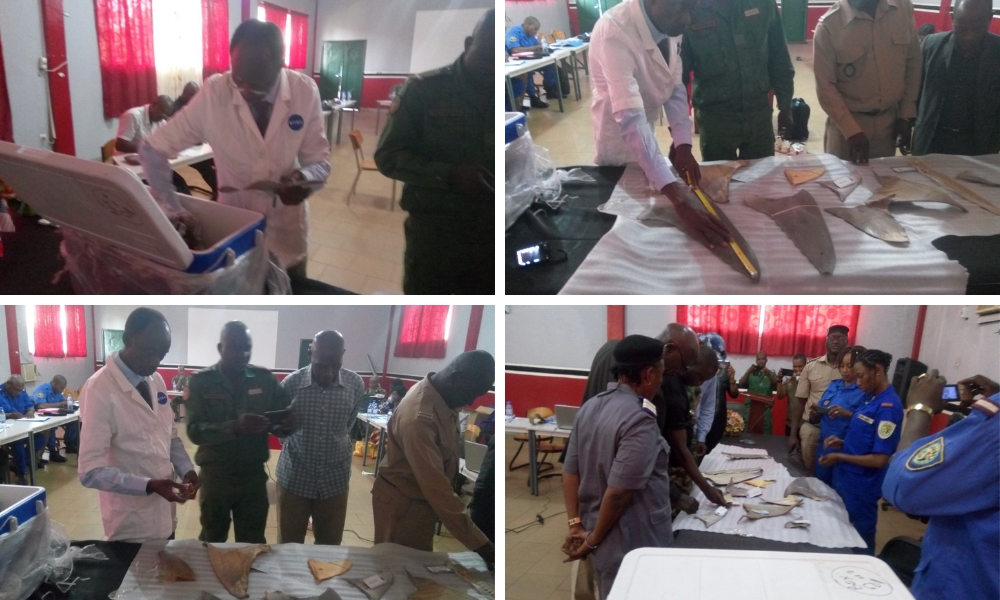
What I didn’t know was just how real and…odorous…such a training would be, especially by the end of the week, day after day in that hot, stuffy conference room. When I started my career, I had no idea that I would one day be excited to spend a week smelling seized animal specimens grow increasingly funky. But since then, Born Free USA has trained more than 1,500 customs agents, park rangers, border guards, prosecutors, and judges throughout West Africa to recognize and seize illegally fished or hunted wildlife and to arrest the poachers and traffickers who send them to export markets. Born Free continues this work in many ways, including through establishing and supporting expert mentoring panels that support wildlife law enforcement officers in the field to identify animals and animal parts, to collect evidence, to investigate trafficking networks, and to support raids of poaching and trafficking operations.
West Africa Takes the Lead in Protecting Marine Ecosystems
I’ve been thinking about that training in West Africa a lot lately because it’s been a busy time when it comes to the health of our oceans and the wildlife they contain, and the countries of West Africa have quietly stepped up to show the world what it looks like when you make a commitment to keeping wildlife in the wild.
The UN High Seas Treaty, formally known as the much more unwieldy “United Nations Convention on the Law of the Sea on the Conservation and Sustainable Use of Marine Biological Diversity of Areas beyond National Jurisdiction (BBNJ)” entered into force on January 17, 2026. Negotiations stretched on for many years until there was finally consensus on the Treaty. Then came the long process of national ratification. Once 60 countries ratified the Treaty, a milestone finally reached in September 2025, the Treaty became a legally binding international instrument for the conservation and sustainable use of marine biological diversity in the High Seas. Currently, 83 countries have ratified the treaty, and many more are expected to soon.
The “high seas” are ocean and deep-sea areas beyond the national jurisdiction of each country. They cover about half of the Earth’s surface and 64% of the world’s ocean surface, but only 1% of the high seas were protected prior to the entry into force of the Treaty. This Treaty is so important because marine species are in high demand in illegal markets. Sharks and rays are targeted for their fins, sea turtles are poached for meat, eggs and shells, reef fish are captured as live ornamental fish and seahorses are heavily traded as an ingredient in traditional medicine. This is causing immense damage to populations of these species.
Removal of these endangered marine species from the ocean, through illegal poaching and trafficking, has far-reaching effects on marine ecosystems. For example, overexploitation of species such as sharks can lead to imbalances in food webs. As top predators, sharks play a key role in the ecosystem by maintaining the species below them in the food chain and serving as an indicator for ocean health. Sharks inhabiting coastal waters also protect and enhance what is known as “blue carbon” – carbon stored in oceans. Removing smaller species can also be damaging. For example, reef fish play a vital role in maintaining healthy coral reefs, and their removal has led to massive losses of corals worldwide.
While the entry into force of the High Seas Treaty is a moment for celebration, it is also time to roll up our sleeves and get to work establishing new Marine Protected Areas (MPAs) and making sure that the mechanisms to protect them are enforceable. West Africa has been a true example of conservation leadership. West African countries were the most represented bloc in the world advocating for ambition in negotiating for the Treaty and in ratifying it. West Africa has not stopped there, though. They have swiftly begun planning an ambitious MPA off the coast of West Africa in the convergence zone of the Canary and Guinea Currents, one of the most biologically productive marine areas on the planet, supporting a rich mosaic of marine ecosystems and species that play vital ecological, economic, and cultural roles. Proposals such as this will eventually be presented to a BBNJ Conference of Parties (COP), where they will hopefully be adopted.
CITES COP20 in Uzbekistan Provides New Protections for Shark and Ray Species
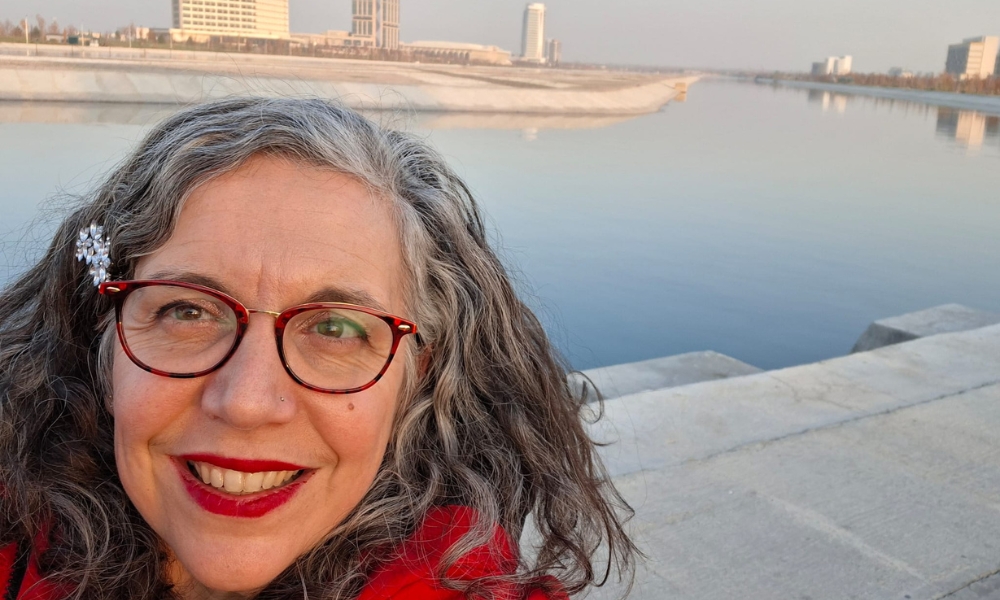
That’s not the only Conference of the Parties (CoP) in the news recently. I represented Born Free USA at the Convention on the International Trade of Endangered Species (CITES) CoP that took place in Samarkand, Uzbekistan this past November and December. Prior to the CoP, Born Free USA supported the development of numerous West African proposals to increase protections for shark and ray species. During the CoP negotiations, I worked closely with delegates from West Africa, providing them with technical and legal guidance.
These proposals were overwhelmingly successful, and governments attending the CITES CoP in Uzbekistan agreed to protect the most imperiled shark and ray species from the harmful impacts of international trade. This included an international commercial trade ban for oceanic whitetip sharks, manta and devil rays, and whale sharks; establishing zero exports of wild-caught specimens of wedgefish and giant guitarfish; and measures regulating international trade to ensure it is non-detrimental for gulper sharks, smoothhound sharks, and the tope shark.
Shark and ray species are on the brink of extinction. Demand for high-value fins, meat, and other products plays a significant role in driving population declines. Stronger CITES protection is urgently needed and might be the one lifeline these species need to prevent extinction. Newly adopted CITES regulations will help close legal and enforcement loopholes that have been exploited by organized criminal networks to perpetuate illegal trade driving species to extinction.
Born Free USA has long invested in the protection of these species through its enforcement work across the West African region. Whether through hands-on training in stifling hotel conference rooms, the development of identification guides, establishing and mentoring specialized wildlife law enforcement task forces, or the launch of targeted outreach campaigns across the West Africa, Born Free USA has been deeply committed to the disruption of criminal networks targeting shark and rays. Assisting West African countries as they displayed global leadership to protect these species was a true honor.
Wildlife Law Enforcement Task Force in Ghana Seize Massive Illegal Shipment of Shark Fins
Born Free USA worked with the government of Ghana to establish a Wildlife Law Enforcement Task Force beginning in 2023. This Task Force enhances cooperation between the various agencies involved in enforcing laws that prohibit wildlife poaching and trafficking. Trafficking networks are often well-funded, well-armed, and well-organized so cooperation is crucial to successfully disrupt or destroy these networks.
In late December, Ghana’s Wildlife Law Enforcement Task Force seized a massive shipment of shark fins that were being smuggled out of the country. Nearly 4,000 fins with a value between $300,000 and $400,000 on the illegal market were seized, and the primary suspect was arrested and turned over for prosecution. The fins came from four different species of shark, none of which may be exported without special CITES permits ensuring the shark population would not be harmed were they to be killed.
This news is a vivid reminder of my time with all those shark fins in that hot conference room, and it’s an exciting time to see the countries of West Africa fiercely protect the wildlife in their oceans. But it’s also a reminder that better laws and better enforcement alone aren’t enough. Alternative livelihoods for local communities that prioritize ocean conservation, increasing and developing new Marine Protected Areas, and decreasing demand for endangered species must also play a role if we hope to keep wildlife in the wild and make our planet more habitable.
Keep Wildlife in the Wild,
Alice
Dear Reader,
We are a nonprofit committed to wildlife conservation, welfare, and rescue. Making resources free and widely distributed, like our news items, is an important part of our mission. If you found this article helpful, enjoyable, or enlightening, please donate to help keep these resources available, and Keep Wildlife In The Wild.
Thank You,
The Born Free USA Team


 Dear Reader,