I am recently back home after representing Born Free USA at the 20th Conference of the Parties to CITES, where Born Free supported West African nations in advocating for the adoption of enhanced CITES protection for species increasingly imperiled by international trade.
I am excited to announce that, in addition to new protections for shark and ray species, which we reported on last week, the CoP advanced protections for several other species Born Free USA was advocating for along with our partners in West Africa. Explore these major wildlife wins below!
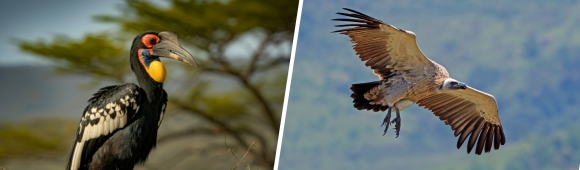
Protections for West African Birds and Preservation of their Conservation Role
African Hornbill Species Receive CITES Appendix II Listing
In a major push to protect bird species, eight African nations succeeded in securing the protection of seven African hornbill species in the genera Bycanistes and Ceratogymna in CITES Appendix II.
Hornbills are seed dispersers, playing an essential role in shaping and sustaining Africa’s forests. The decision to list them in Appendix II will mean that international trade is strictly monitored and regulated, to ensure it does not jeopardize the species’ survival.
These amazing birds are in decline due to a range of factors, including international trade in their skulls/casques and feathers. Recent large-scale seizures of African hornbill heads bound for the U.S., Europe, and China highlight increasing international demand.1 Securing the protection for these species was urgent and protection of African species under CITES will also close a loophole that complicates the enforcement of international trade regulations protecting Asian hornbills (African hornbill skulls and feathers often resemble those of already-protected Asian species, making illegal trade harder to detect).
African Vulture Species Move from CITES Appendix II to Appendix I
The CoP also strengthened the protection for African vultures, transferring critically endangered white-backed and Rüppell’s vultures from CITES Appendix II to Appendix I, a move that prohibits all international commercial trade for these two species. Vultures hold a unique role in African ecosystems, removing carcasses and other waste from the environment thereby reducing the spread of disease and contamination of water. Born Free USA has long advocated for strengthening the protection of African vultures – for more information click here.
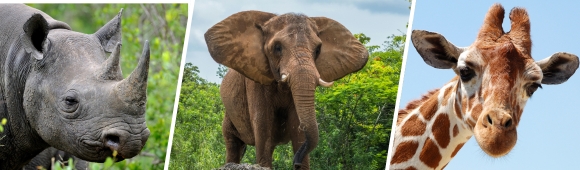
Rhinos, Elephants, and Giraffes Retain CITES Protections
Attempts to weaken international trade restrictions for Africa’s iconic giraffes, elephants, and rhinos were all defeated. These proposals, submitted by Southern African States, would have had devastating consequences, such as opening elephant ivory and rhinoceros horn trade and eliminating trade protections for giraffes in eight African nations.
Poaching elephants and rhinos for their tusks and horns has brought populations to the brink of extinction. The decision to uphold Appendix I protections for critically endangered black rhinos and to reaffirm that all trade in stockpiled rhino horn, whether held by governments or private landowners, will remain strictly prohibited was imperative to preserve the species.
Reopening international trade in elephant ivory would have fueled poaching, endangering African elephants while concomitantly undermining global calls for a closure of domestic ivory markets and efforts to reduce demand and improve enforcement (UNGA Resolution of June 2025).
Similarly, the decision to maintain full Appendix II safeguards for all giraffe populations comes at a time when giraffe populations remain jeopardized, with their numbers having declined by 40% in the past 30 years with fewer than 69,000 mature giraffes remaining in the wild. While giraffes used to range throughout much of West Africa, their only remaining population in the region consists of 425 giraffes in Niger. International trade in giraffe bone carvings, skins, and trophies continues to put extra pressure on giraffe populations. Since their Appendix II listing in 2019, CITES has documented more than 1,500 trade records from 37 exporting countries and more than 100 importers, involving thousands of bones, carvings, and skin pieces.
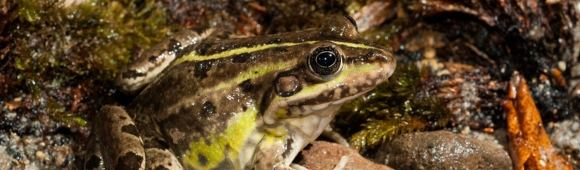
Victory for Frog Species in High Demand as Food and in the Pet Trade
At the request of the European Union, the largest market for frog legs, European water frogs were granted CITES protection. Four species of water frogs will be protected under CITES Appendix II, regulating international commercial trade. Commercial trade in frogs and their body parts is global and occurs in extremely large volumes affecting billions of frogs per year.
Frogs are also the most common amphibians in the international pet trade. Amphibians are more threatened than any other vertebrates. Forty-one percent of amphibians globally are threatened with extinction, making them the most threatened vertebrate group – CITES protection is thus well overdue.
Frogs significantly contribute to maintaining the balance of the natural world, controlling insect populations, and providing a critical food source for birds, fish, snakes, and other wildlife. They also act as environmental indicators by providing an early warning when environmental changes negatively impact ecosystems and watersheds.
Born Free USA has long been advocating for the protection of frogs and is actively working on combatting illegal trade in frog species across West Africa. For more information see this podcast interview and this blog post.
Our Work to Protect Wildlife Continues
The CITES CoP might be over, but Born Free USA’s work to protect threatened species continues! We are on the ground in West Africa providing critical training to law enforcement officials throughout West Africa to equip them to identify and rescue trafficked wildlife and bring traffickers to justice. This work is important to ensure that the protections offered by CITES and national laws are meaningful and enforced.
You can stay up to date on this work by following us on social media and joining our email list!
Keep Wildlife in the Wild,
Alice
- Su, S., Guetse, F., & Arcilla, N. 2024. A price on their heads? Assessing foreign demand as a driver of hornbill hunting in Cameroon. Global Ecology and Conservation 51: e02905.
Dear Reader,
We are a nonprofit committed to wildlife conservation, welfare, and rescue. Making resources free and widely distributed, like our news items, is an important part of our mission. If you found this article helpful, enjoyable, or enlightening, please donate to help keep these resources available, and Keep Wildlife In The Wild.
Thank You,
The Born Free USA Team


 Dear Reader,