
Teachers’ Pets: The Exploitation of Wild Animals in the Classroom (2025)

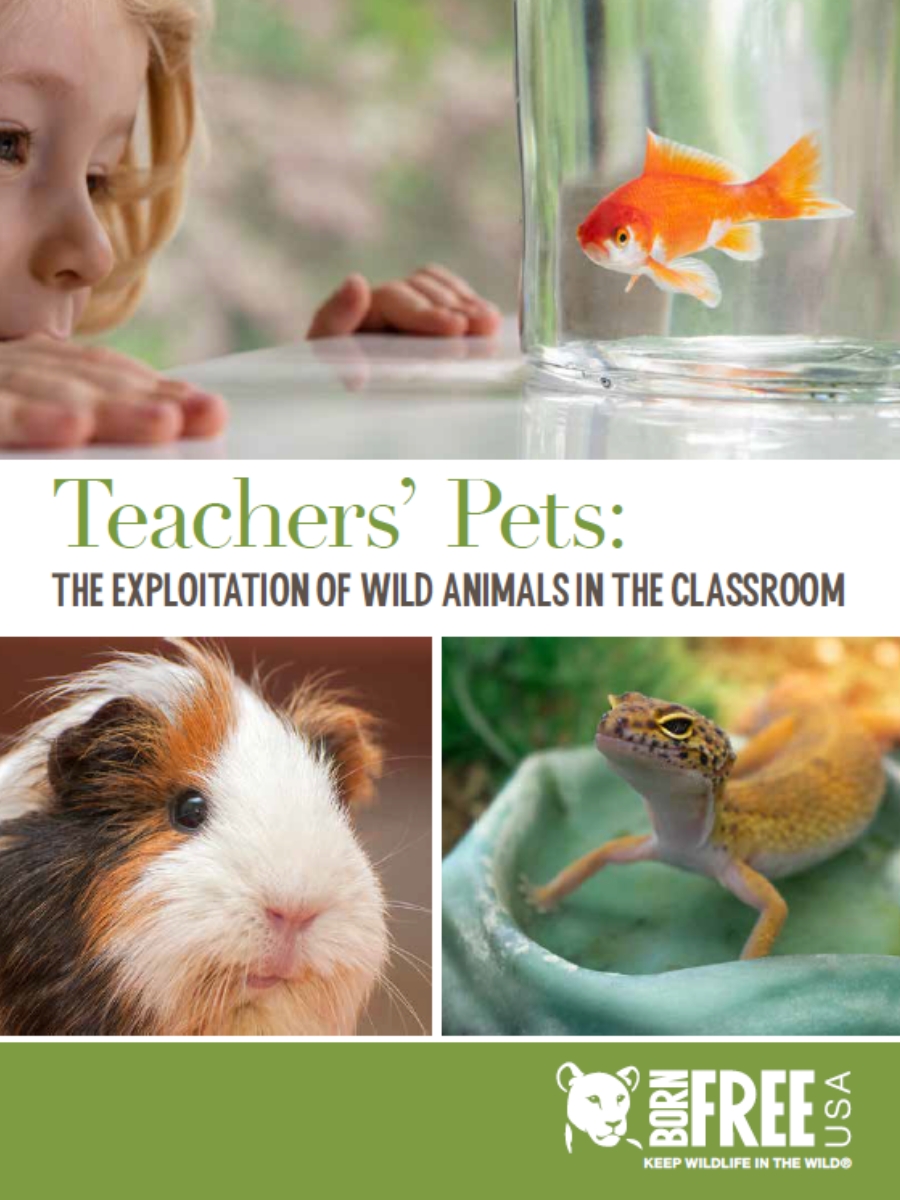
Teachers’ Pets: The Exploitation of Wild Animals in the Classroom evaluates the keeping of exotic pets in the classroom and mobile zoo visits to schools. Our report summarizes the landscape of both practices in the U.S. and the corresponding lack of regulation; outlines the public health and safety issues; highlights the animal conservation and welfare concerns; and dismantles the alleged educational “benefits.” We argue that banning classroom pets in school districts and prohibiting mobile zoos from school property remain the most effective and logical solutions to protect future generations of students and help keep wild animals in the only environment in which they truly belong: the wild.

Addressing this topic has become more urgent since 2020, when COVID-19 became a worldwide pandemic that impacted the lives of millions. Since 1919, there have been at least 19 major global pandemics associated with wildlife, killing hundreds of millions of people and countless animals globally. Because wild animals remain the main vectors of many diseases with the potential to become the next major pandemic, minimizing direct contact between humans and wild animals should be prioritized; especially with the most vulnerable populations like children.

In addition to telling the stories of several classroom pets who died tragically preventable deaths due to miseducation or neglect by handlers in schools (including students, parents, and teachers), we use statistics to illustrate the unnecessary and potentially harmful nature of allowing wild animals in schools.

Teachers' Pets Report Cover

Download the Report

Teachers' Pets: The Exploitation of Wild Animals in the Classroom - Full Report (PDF)

Teachers' Pets: The Exploitation of Wild Animals in the Classroom - Full Report (Flip Book)

One-Page Report Summary (PDF)

Hear their Stories

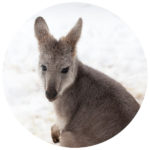
Hoppy the Kangaroo

Hoppy the baby kangaroo died after escaping a mobile zoo’s transport van.

Hoppy was a 10-month-old baby kangaroo who was owned and exploited by a mobile petting zoo. In April 2019, she was taken alongside other animals to Little Rock Air Force Base for an event. Hoppy was last seen in a cloth pouch on the back of the headrest of the front seat of the petting zoo’s truck. What followed is unclear, but she escaped the vehicle via an open window, possibly after being started, and fled into a nearby wooded area. Days later, Hoppy was found dead with evidence of wounds from an attack by a dog or coyote. The petting zoo faced criticism following Hoppy’s death, but its owner noted that their business was licensed by the USDA and therefore, operating within the law, and concluded that “Anytime you’re dealing with animals, things can happen.”

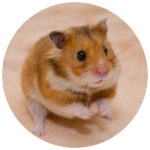
Cupcake the Hamster

Former classroom hamster Cupcake suffered a stroke in the home of his new owners and was denied medical care for a week before being killed with rat poison.

Cupcake was kept as a classroom hamster before the mother of one of the students agreed to take Cupcake home. Cupcake lived with the family for two and a half years until one day the mother came home to discover that the hamster had suffered a stroke. She explained: “There was a marked weakness to his right side, he couldn’t turn his head and had difficulty walking. For about a week, Cupcake mostly slept, hardly ate or drank and barely dragged around his glass cage.” Having failed to seek any treatment for Cupcake for a week, she finally took the hamster to the vet, who confirmed a stroke. Not being able to afford humane euthanasia, the woman took Cupcake home where, she says, she “spent several days with [her son], then nine, staring at Cupcake, wondering what to do.” Ultimately, she decided to use rat poison to kill Cupcake. Over the course of two days, the women sprinkled rat poison on Cupcake’s food. It took the hamster three days to die. Rat poisons cause great suffering to their victims, causing a long drawn out and often painful death.

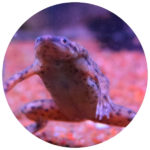
Unnamed African Dwarf Frogs

Three African dwarf frogs who were kept as classroom pets died on the first weekend after they were adopted by a student’s family.

In a story shared in a blog titled “That Time I Killed My Kid’s Classroom Pet #Oops,” the writer described their experience after agreeing to adopt three African dwarf frogs from their child’s school. Due to their unpreparedness to take care of the animals and failure to properly read the animal care instructions provided, they ended up killing the frogs within the first weekend. The blog post concludes with the parents stating that they would make a trip to the pet store to replace the animals, failing to demonstrate any remorse or regret for these animal deaths that were largely preventable and demonstrating a profound sense that the animals’ lives were inherently disposable.

Unnamed Hamster

A teacher sees the premature death of her class’ pet hamster as a blessing that saved the animal from further suffering.

An elementary school teacher wrote about the sudden death of a hamster kept as a classroom pet, describing the animal’s premature death as a blessing that prevented further suffering. She wrote: “It is no sad event. In fact, looking back over this little guy’s life, he has really been through a lot of trauma. Being a classroom pet to 20 hyper kids (who think poking a hamster with pencils is a sport) probably didn’t prolong his life. I am forced to reflect on his death and the death of my previous hamster, who passed away alone in my classroom over last Thanksgiving break… [D]warf hamsters have a life expectancy of two [to three] years, so I was forced to reflect on what might have caused his departure a year [or two] early. … [H]is classroom experience with 20 seven-year-old students feeding him crayons probably had a little to do with it.”

Donate to Fight the Exotic Pet Trade

Around the world, wild animals are taken from their natural homes or bred in captivity to languish in cages or tanks for human amusement – including untold numbers of small animals commonly kept as classroom pets like birds, reptiles, and fish.

You can help protect wildlife from the exotic pet trade by making a donation to Born Free USA. Your donation supports work to end the exotic pet trade through legislation and public education; advocate for an end to the use of captive wildlife in entertainment; fight the exploitation of animals in captivity through reports and rescue; and halt the illegal trafficking of protected species for the pet trade.

DONATE NOW

Share the Report

Help spread the word about the suffering of wild animals in classrooms and mobile zoos by sharing Teachers’ Pets on social media!

Twitter/X

Countless animals are exploited in schools and in mobile zoos, enduring lives of neglect and mistreatment. Explore the dark reality of classroom pets with @bornfreeusaorg’s report, #TeachersPets. bit.ly/classroompetsreport

Download Share Image

Facebook

Countless animals are exploited in schools and in mobile zoos, enduring lives of neglect and mistreatment. Explore the dark reality of classroom pets with @bornfreeusaorg’s report, “Teachers’ Pets.” #TeachersPets bit.ly/classroompetsreport

Download Share Image

Instagram

Countless animals are exploited in schools and in mobile zoos, enduring lives of neglect and mistreatment. Explore the dark reality of classroom pets with @bornfreeusaorg’s report, “Teachers’ Pets.” #TeachersPets

Download Share Image

Born Free USA is a 501(c)(3) non-profit organization. EIN 94-6187633.