This blog is the first in a series of four blog articles that will highlight marine conservation work in Ivory Coast. Follow along for the rest of the series!
Along a quiet stretch of Ivory Coast’s southwestern coast, sea turtles, West African manatees, and Atlantic humpback dolphins (one of the rarest dolphins on Earth) are fighting for survival. All these animals are fully protected under Ivorian law. However, they are all under threat from poaching, plastic pollution, accidental capture in fishing nets, and the steady disappearance of the mangroves they depend on.
This summer, Born Free USA partnered with Ivory Coast’s Wildlife Authorities (DRFC) to do something no one had done before: systematically map where these animals nest and feed along the Sassandra and Fresco coastline, and lay the groundwork for protecting them.
The Mission
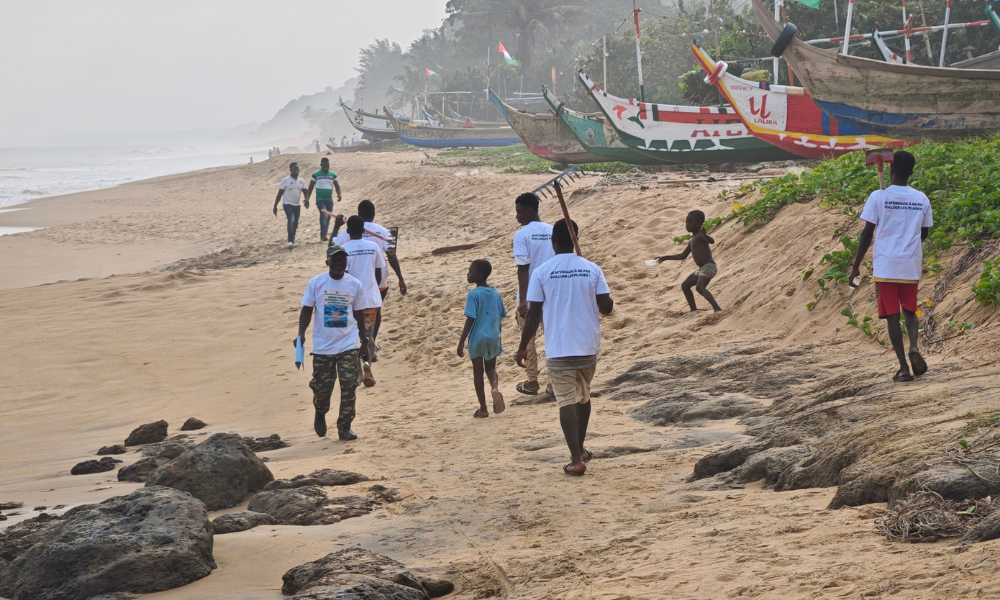
From June 21 to 26, 2026, a DFRC field team met with local authorities and geolocated the coast’s most sensitive sites. Their route took them through the fishing communities, where they walked the shoreline with local guides to log every nesting site and assess whether plastic pollution is a real concern in those areas.
What They Found
The results were striking. The team identified 11 separate sea turtle nesting sites in total, seven in Sassandra and four more in Fresco, alongside numerous points of plastic pollution scattered along the beaches.
Then came a moment that made the mission’s urgency impossible to ignore. While the team was in Sassandra, word reached them of a baby manatee caught accidentally in a fisherman’s net on the Sassandra River. The team rushed to the scene, and the calf was placed under the care of the local forestry authority to give it the best chance of survival. It was a vivid reminder of exactly what this program exists to prevent. Details of the rescue and photos are available here.
Meanwhile, local residents pointed the team toward another lead worth following: reports of a resident manatee population in the lagoon near Fresco Plage. It hasn’t been confirmed yet, but it’s exactly the kind of tip that field verification and future missions will help resolve.
Building a Foundation
Beyond the mapping itself, this first mission also opened doors in the communities they visited. The team met with the Prefects of both Sassandra and Fresco; regional environment, fisheries and sanitation directorates; local chiefs; and fishing community leaders, explaining the program and setting dates for the coordination meetings that would follow. Two focal points were named in each community to help carry the work forward.
Why It Matters and How You Can Help
You can’t protect what you haven’t found. This mission turned a stretch of coastline into a map, identified eleven nesting beaches and orchestrated the rescue of a manatee calf that might not have survived without a team already on the ground. It’s also the first chapter in a program that, over the following weeks, will bring coordination meetings, community education, fisherman training, and beach clean-ups to nine villages.
None of this work happens without support. Support our work so more sea turtles, manatees, and dolphins along this coastline get the protection and second chances they deserve.
More from this Series
Part Two: 331 Coastal Voices: Building Committees to Protect Marine Life in Ivory Coast
Part Three: Turning the Tide in Ivory Coast: Training 199 Fishers to Save Sea Turtles Caught in Their Nets
Part Four: Sweeping the Shoreline: Communities Unite Against Plastic Pollution, One Bottle at a Time
Keep Wildlife in the Wild,
Alice
Dear Reader,
We are a nonprofit committed to wildlife conservation, welfare, and rescue. Making resources free and widely distributed, like our news items, is an important part of our mission. If you found this article helpful, enjoyable, or enlightening, please donate to help keep these resources available, and Keep Wildlife In The Wild.
Thank You,
The Born Free USA Team

 Dear Reader,