In western Ivory Coast a quiet crisis is unfolding, but so is a powerful opportunity for impact. Once home to thousands of elephants, only 500 remain in the country, a dramatic 83% decline in recent years. This is a human issue as much as it is a conservation issue because farming communities are on the frontlines of human-elephant conflict, where crop destruction threatens livelihoods and fuels tension between people and wildlife.
The Ivorian government recognized the urgency and introduced a new wildlife protection law in June 2024, strengthening legal safeguards for elephants. But laws alone are not enough and local communities living close to elephant corridors need more support to participate in conservation efforts. In March 2026, Born Free USA and the Ivory Coast Ministry of Water and Forests launched a targeted outreach campaign that demonstrated community-led conservation that works.
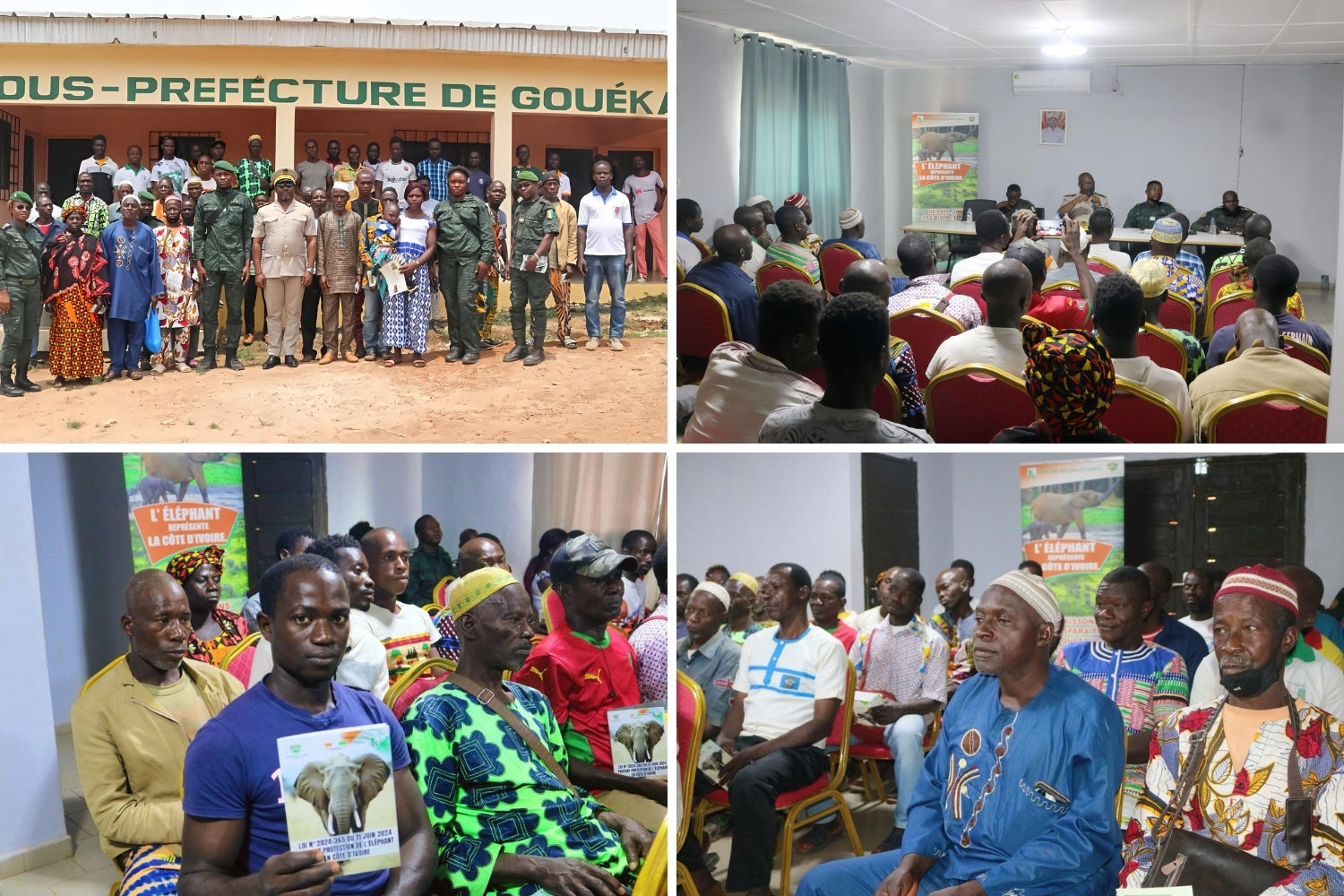
Over six days in March, Born Free USA supported a small team from the Ministry of Water and Forests to engage nearly 300 participants across four high-risk areas in Bafing and Tonkpi.
The Team had Four Goals
1. Listen to Communities
Instead of imposing solutions, the initiative began with dialogue. Farmers, village leaders, and youth shared their concerns about crop losses and the lack of compensation for damage caused by elephants. This built trust and ensured that solutions were grounded in real needs.
2. Provide Practical Solutions
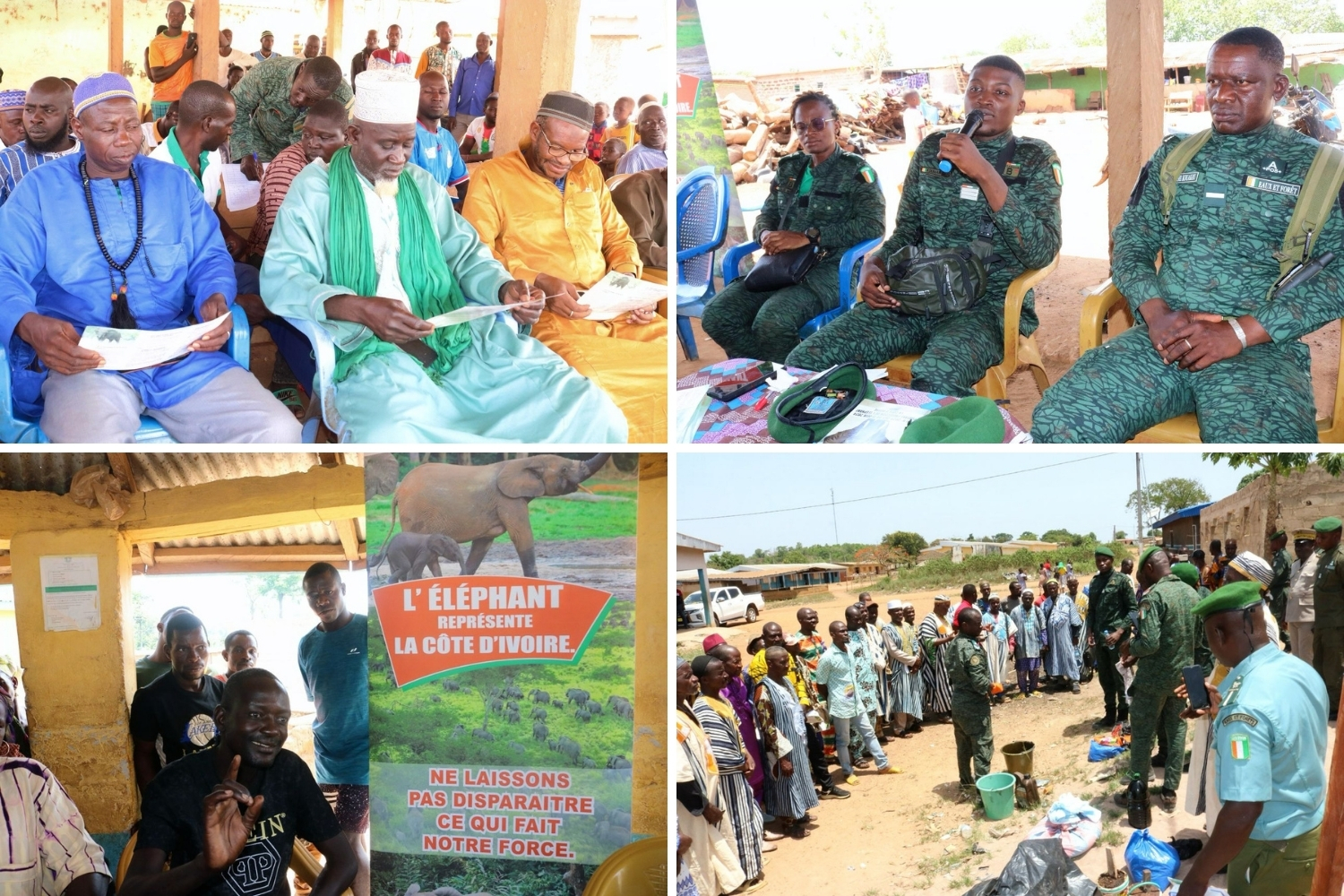
The campaign focused on simple, affordable techniques that communities can adopt immediately:
- Chili-based deterrents (bricks and fences)
- Natural repellents using local materials
- Improved monitoring practices
Hands-on demonstrations showed farmers exactly how to apply these methods. These solutions are low-cost, scalable, and, most critically, non-lethal to elephants.
3. Strengthen Local Capacity
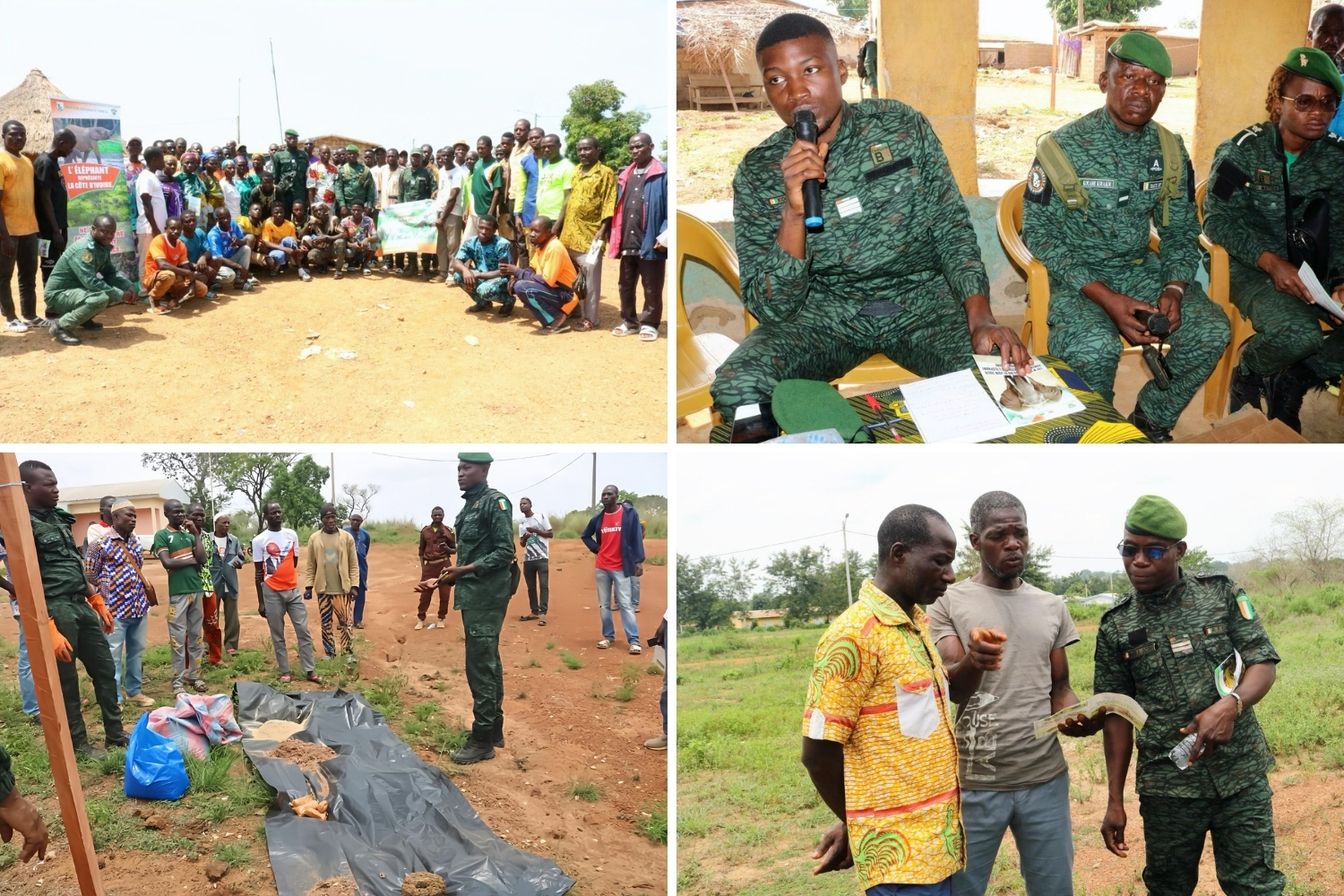
Another important component was capacity building for forestry agents to ensure long-term impacts. A dedicated training session brought together 20 officers from the regional forestry department. They received training on:
- Elephant behavior
- Conflict management strategies
- Community engagement techniques
4. Reach People Effectively
To ensure inclusivity, sessions were conducted in multiple local languages (including Yacouba, Malinké, and Moré) to make the information accessible to all participants. The campaign also revealed the significance of elephants in communities like Binkadi where local leaders explained how the cultural symbolism of elephants reinforced a sense of respect and protection.
The Impact
Nearly 300 people were trained and engaged
Over 1,000 awareness-raising brochures were distributed
Communities began adopting crop protection techniques
Collaboration between authorities and communities was strengthened
Why Donor Support Matters Now
Despite these gains, the need remains urgent. Communities are asking for wider access to protective tools, continued training and follow-up, support to address crop losses, and long-term solutions for coexistence.
Meanwhile, habitat loss continues to push elephants closer to farms, increasing the risk of conflict.
With additional funding, this initiative can expand to more high-conflict areas, equip communities with effective deterrents, train more local agents and leaders, and strengthen monitoring and early-warning systems.
Every investment directly supports practical, community-driven solutions that protect both livelihoods and wildlife.
The March 2026 campaign proves that human-elephant coexistence is possible. Communities are ready to act. The tools are known. The momentum is there. Now is the time to increase our support and expand programs like this. You can help make this a reality by making a donation.
Keep Wildlife in the Wild,
Alice
Dear Reader,
We are a nonprofit committed to wildlife conservation, welfare, and rescue. Making resources free and widely distributed, like our news items, is an important part of our mission. If you found this article helpful, enjoyable, or enlightening, please donate to help keep these resources available, and Keep Wildlife In The Wild.
Thank You,
The Born Free USA Team


 Dear Reader,