When the Born Free USA Primate Sanctuary answers a call with a request to take in a monkey, our goal is always to find a friend or social group for them to live with. Sometimes, monkeys come to the sanctuary together – like baby baboon Little Foot, her mom Dee Dee, and “aunt” Izzy, who came to us in 2025, after being used in a laboratory.
A few months later, baby baboons Mari, Peach, and Ophelia were confiscated from an exotic animal dealer and became our newest sanctuary residents. Our goal and hope has been to integrate the babies with one of our existing baboon groups at the sanctuary. We’re excited to share an update with you about that process!
New Arrival Protocols at the Sanctuary
Upon arrival at the sanctuary, all monkeys receive a veterinary check and go through a mandatory quarantine to protect the other monkey residents. When the baby baboons had their initial veterinary checks, there were issues discovered with Mari’s liver, Ophelia’s liver and heart, and Peach’s heart. These issues were all likely due to poor nutrition.
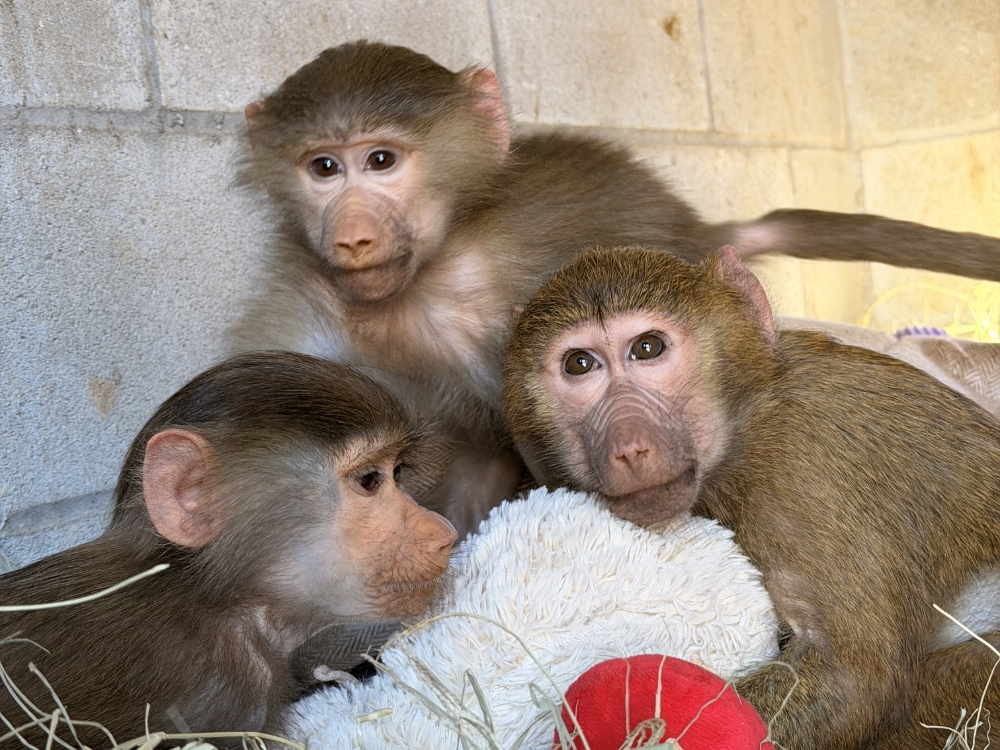
Thanks to a nutritious diet and veterinary care from the dedicated sanctuary team, they have all passed their quarantine and have made major health improvements with nearly all of the issues being resolved. And with their new sanctuary life, they will now always have the care and nutritious diet that they require.
Matchmaking Monkeys: Introducing Baboons at the Sanctuary
Monkey introductions are always approached carefully. The team at the sanctuary considers personalities, health statuses, histories, and dozens of other qualities when brainstorming which monkeys might get along.
Babies Mari, Peach, and Opehlia are energetic, curious but cautious, and very playful. While Little Foot is a few months older than they are, she is also a young, playful baboon. Dee Dee and Izzy have shown to be such great caretakers for Little Foot, so we hoped they would accept the three additional youngsters.
The first step in their introduction involved letting Little Foot meet the baboons through the safety of a fence, in case any party were to show any signs of aggression. Thankfully, they showed quite the opposite! Almost immediately, Little Foot and Ophelia were hugging through the fence.
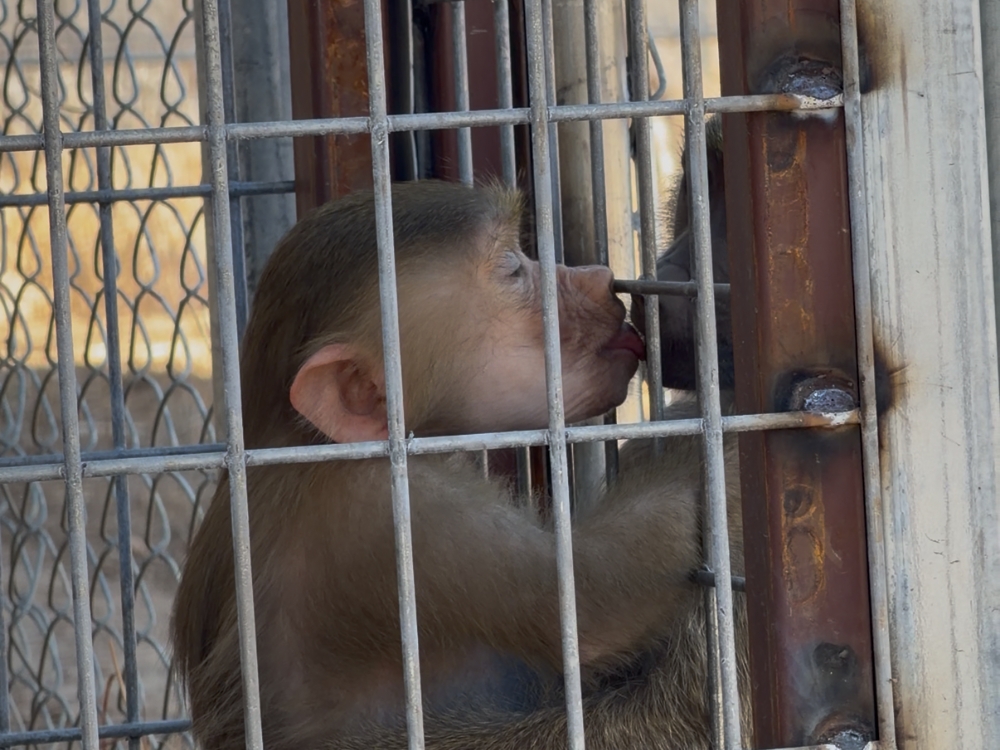
After more time socializing through the fence, and with careful observance of Dee Dee and Izzy’s behaviors, all of the monkeys showed positive signs to proceed with introductions. The baby baboons were moved into a space alongside the enclosure that Little Foot, Dee Dee, and Izzy live in to continue socializing through the safety of the fence on their own terms.
As Little Foot continued to show curiosity, interest, and a desire to play, the next step involved letting Little Foot into a space with Mari, Peach, and Ophelia. These initial introductions typically occur in a space small enough for caretakers to address any potential issues with distractions and deterrents. The babies all had so much fun bouncing and playing! Dee Dee and Izzy watched and did not show signs of concern, so everything was going precisely as the team hoped.
The Biggest Space They’ve Known
After more supervised playdates across all parties and more time living alongside one another, everyone was ready to take the next step. Baby baboons Mari, Peach, and Ophelia entered the big open-top yard that baby Little Foot and adults Dee Dee and Izzy live in, with access to the adjacent space they are familiar with to return to in case they got scared.
They were cautious at first, then they began to explore their surroundings – Peach loved ripping up and eating the roots of plants she found. Mari and Little Foot wrestled and played in the large open yard. Mari and Ophelia drank from a water fixture, then Little Foot showed them how to use it properly.
The babies occasionally ran back to their familiar space when unfamiliar sounds startled them, but they were brave, curious, and by all measures passed this “test” in the introduction process.
Next Steps for the Baboons
As the integration process continues, we will share more updates and videos to our social media channels, so be sure to follow us on Facebook, Instagram, TikTok, and YouTube!
Baby baboons Mari, Peach, and Ophelia are three of 200+ residents at the Born Free USA Primate Sanctuary – each with individual personalities, care needs, favorite foods, toy preferences, and more. We anticipate the lifetime care costs for Mari, Peach, and Ophelia to be upwards of $90,000.
For the Animals,
Liz
Dear Reader,
We are a nonprofit committed to wildlife conservation, welfare, and rescue. Making resources free and widely distributed, like our news items, is an important part of our mission. If you found this article helpful, enjoyable, or enlightening, please donate to help keep these resources available, and Keep Wildlife In The Wild.
Thank You,
The Born Free USA Team


 Dear Reader,