My first African experience was in 2006 where I participated in a training program for wildlife law enforcement officers in Guinea and Sierra Leone to combat trafficking in live chimps. Civil unrest meant we couldn’t land in Guinea, so we flew to Sierra Leone, landing at their international airport, located across an estuary from Freetown, the capital. At the time, the road from the airport to Freetown was undeveloped, and the ferry service was intermittent and unreliable. We were flown from the airport to the city in an old helicopter that crashed the following year, killing all 22 people aboard. At the hotel, electricity and running water were intermittent, and I had to ask someone to fetch a large bucket of water to get cleaned up. I was shocked to see the number of people missing limbs from terror campaigns during the country’s recent civil war. And I was moved and inspired by the stories people seemed so eager to tell about how they were rebuilding their country.
Doing So Much with So Little
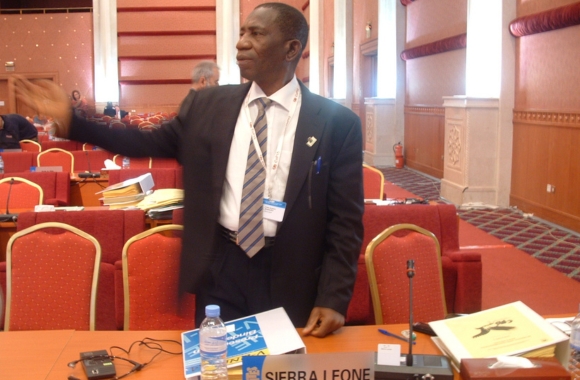
The next morning, I met Mr. Kalie Bangura, the CITES management authority working at the Forestry Division of Sierra Leone’s Ministry of Agriculture, Forestry, and Food Security. I don’t know exactly what I expected his office to look like, but my image was not what I found: a cinderblock room with iron bars covering the hole where a window would have gone, a beat-up desk with no computer on it but a bag of elephant tusks seized from poachers lying on the floor beneath it, and a dented metal locker where he kept other seized specimens for training purposes.
When there was electricity, and he needed a computer and the internet, he would work from a nearby internet café. When he was alerted to poaching activity, he would send rangers out on foot to investigate. Sometimes it would take them several days to reach the crime scene, by which time the poachers had long fled. The Born Free Foundation was later able to purchase bicycles to help park rangers travel more quickly to the remote places where illegal trafficking networks operated. Mr. Bangura worked without adequate pay for many years because he believed in the importance of preserving his country’s forests and wildlife. Whether we were meeting in his office in Freetown or strategizing together at CITES conferences, he never failed to champion Sierra Leone. He died several years ago due to complications of malaria and typhoid while out in the field, still working to preserve Sierra Leone’s natural heritage. I will always remember him for his fierce dedication to the promise of Sierra Leone, his infectious enthusiasm, and his kindness to everyone he met. Meeting people like Mr. Bangura, who did so much with so little, reminds me of the importance of supporting even small projects that empower people and give them the tools to protect their lands and the biodiversity they contain.
After we completed the training in Sierra Leone, we were driven to Conakry, the capitol of Guinea. The road between these cities is now paved, and the trip takes about five and a half hours, but back then it was just a bumpy dirt road, and the trip took from early morning until evening. I have a book’s worth of inspiring, sad, hilarious, and surprising stories from my first visits to Sierra Leone and Guinea. So much has changed since then, but beginning with that trip, over and over again, we kept hearing two important requests: 1) park rangers, customs officials, border personnel, judges, and prosecutors needed a mechanism to coordinate resources and information in the fight against illegal wildlife trafficking and 2) they needed advanced investigative and communication technology to counter sophisticated, well-funded trafficking networks.
Providing the People on the Frontlines with Much-Needed Tech Resources
Born Free USA is proud of our work over the past decade to support the establishment of Wildlife Law Enforcement Task Forces (WLETFs) in West African countries. These WLETFs allow rapid, streamlined coordination across law enforcement agencies to prevent, investigate, and prosecute wildlife crime. And now we’re pleased to announce that with funding from the US Department of State Bureau of International Narcotics and Law Enforcement Affairs, Born Free USA has provided WLETFs in Ghana, Nigeria, and Ivory Coast with important new technology and tools to investigate and prevent illegal wildlife trade. The impact is far-reaching because the well-funded and well-armed criminal organizations that traffic endangered animal species are also often engaged in human and drug trafficking. Where officers used to walk for days to reach crime scenes, where internet cafes with spotty electricity provided the only tools for research or electronic communication, and where criminals could count on officers to lack the equipment to inspect shipments and investigate trafficking networks, wildlife law enforcement agencies across West Africa are now rapidly building investigative capability to ensure enforcement teams are equipped with modern tools to meet the complex challenges posed by the poachers and traffickers that threaten West African species, biodiversity, and shared heritage.
And now we’re pleased to announce that with funding from the US Department of State Bureau of International Narcotics and Law Enforcement Affairs, Born Free USA has provided WLETFs in Ghana, Nigeria, and Ivory Coast with important new technology and tools to investigate and prevent illegal wildlife trade.
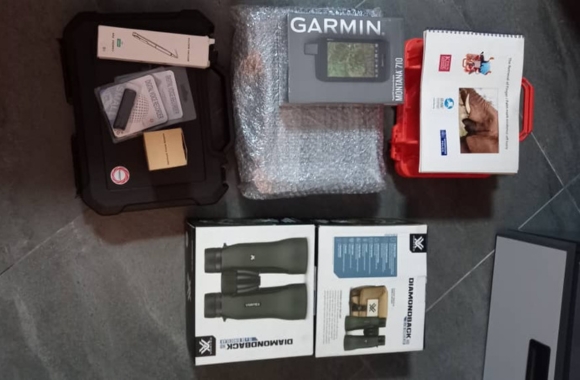
With new endoscope inspection cameras, officers can see objects that are hidden or hard to reach by inserting a flexible scope into vehicles, shipping containers, parcels, or other objects that may contain illicit goods. Covert recording devices that look like ordinary writing pens help undercover law enforcement operations capture audio and video. Compact, high-performance voice-activated recorders help officers record undercover meetings and interviews of suspects and informers. Lightweight, portable, waterproof, and shockproof monoculars help officers determine distance estimations and track surveillance targets like trucks or boats containing poached animal parts. High-resolution binoculars assist officers to observe and track criminal activities, even in low-light situations. Portable touchscreen GPS units help officers plan mapping and navigation during surveillance and operations.
The New Equipment Is Already Being Put to Use to Stop Trafficking
Three months ago in November 2025, Born Free USA mentors provided on-the-ground support to the Nigeria WLETF, including training in the use of this new equipment. The covert audio and video equipment has already been successfully deployed during an investigation into pangolin trafficking. The WLETF is currently utilizing the same audio and video equipment in an ongoing investigation involving a suspect restauranteur alleged to be offering cooked crocodile for sale at his establishment. The investigation remains ongoing.
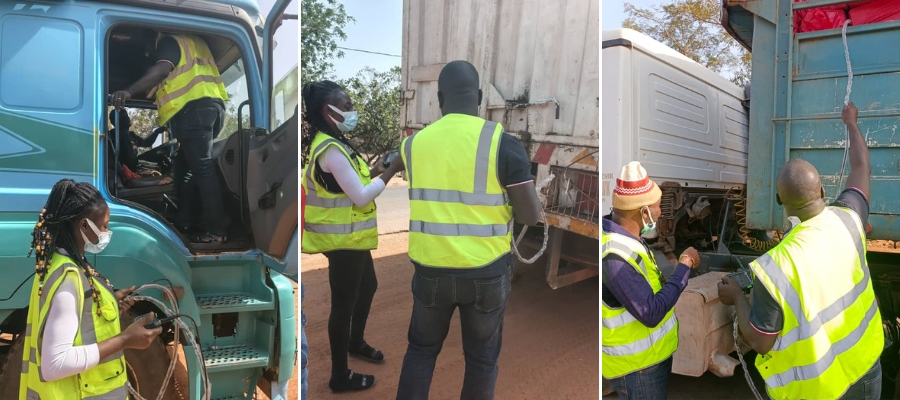
In December 2025, the new equipment was deployed by wildlife authorities in Ivory Coast during a border operation in December 2025, targeting trucks crossing official border posts. Endoscopic searches of vehicles assisted in identifying drivers and vehicles involved in coordinated illegal border-crossing activity. Audio recording equipment was used during inspections to document searches and record drivers’ responses.
The Born Free USA mentors were also in Ghana earlier this month to provide training to the Ghana WLETF in how to use the new equipment.
Other recent seizures by WLETFs trained and mentored by Born Free USA include:
- A seizure by Nigerian authorities on the border with Cameroon in October 2025, which included chimpanzee heads and legs as well as hundreds of parrot, vulture, and toucan heads and feathers. A suspect has been detained for questioning and prosecution.
- A seizure by Ghana’s Wildlife Law Enforcement Task Force In late December that included nearly 4,000 shark fins with a value between $300,000 and $400,000 on the illegal market. The primary suspect was arrested and will be prosecuted.
- A successful intelligence led operation by Benin’s WLETF in August 2025, resulted in the seizure of elephant ivory (80 kg) and the arrest of two suspects.
- A seizure by Customs officers at the Aflao Border in Ghana of three boxes containing nearly 800 reptiles from Togo destined for the USA. The shipment was handed over to the Wildlife Division of the Forestry Commission in Accra when the carriers failed to produce the required documentation.
Born Free USA is proud to work alongside these brave and dedicated men and women, and we look forward to celebrating their continued success in saving animals and stopping traffickers!
Keep Wildlife in the Wild,
Alice
Dear Reader,
We are a nonprofit committed to wildlife conservation, welfare, and rescue. Making resources free and widely distributed, like our news items, is an important part of our mission. If you found this article helpful, enjoyable, or enlightening, please donate to help keep these resources available, and Keep Wildlife In The Wild.
Thank You,
The Born Free USA Team

 Dear Reader,