November 12th is World Enrichment Day! Enrichment is a vitally important part of our work to keep our animals happy and healthy. It consists of activities and experiences designed to stimulate natural behaviors, such as foraging, problem solving, or playing. There are five main types of enrichment that we use: Food, Sensory, Cognitive, Structural, and Social.
Food Enrichment
The aim of Food Enrichment is to prolong feeding times. In the wild, monkeys spend a large portion of their time searching for and collecting food. They don’t have to do that here at the sanctuary where we provide all their food, but they still have a need to exercise that natural behavior. We can make feeding more interesting by presenting their diet in different ways, like hiding it in bags and containers, cutting it up small and scattering it everywhere, and many other methods. Providing novel food items or spreading condiments around their enclosures is also a fun way to increase their natural foraging behaviors.
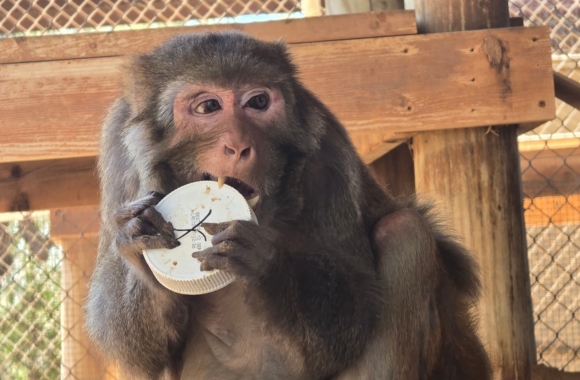
Sensory Enrichment
Sensory enrichment can encompass any of the five senses: sight, sound, touch, smell, and taste. Food enrichment overlaps with the sense of taste, but we aim to engage all the senses so that our monkeys have as rich a life as possible. Spraying perfumes or other scents, putting out novel tactile surfaces like sand or AstroTurf, and giving them things to manipulate or destroy are all good ways to engage the senses. One of the favorite enrichment items is mirrors; monkeys love to look at themselves and their surroundings in a mirror.
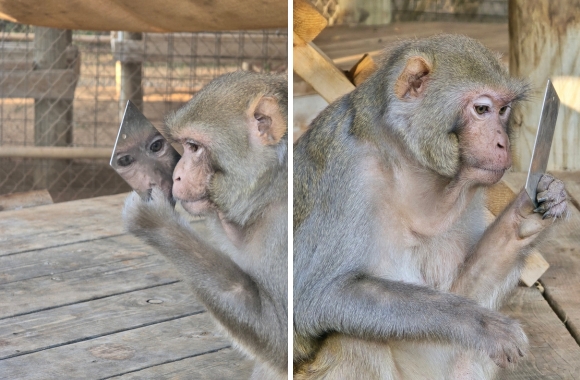
Cognitive Enrichment
Cognitive enrichment enhances mental stimulation. We can give them novel objects or puzzles that they need to use their brains to figure out. Their brains need to be exercised as much as the rest of their muscles, and this is part of how we help keep them engaged.
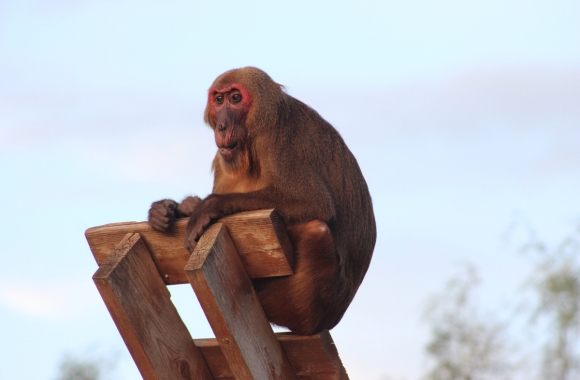
Structural Enrichment
Structural enrichment involves adapting the physical space to make it more interesting or challenging. It also gives the monkeys more choice; they can be high or low, hidden or exposed, resting or playing. We give them ladders, hammocks, firehose walkways, shelves, and many other structures that let them climb and use their muscles as they would in the wild.
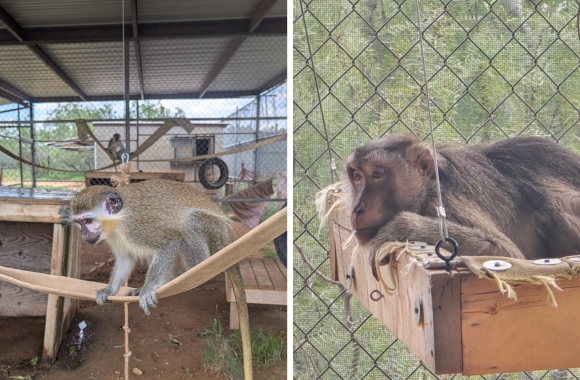
Social Enrichment
The last category is Social Enrichment. Monkeys are very social animals, just like humans! They need to interact with others of their same species in order to be mentally healthy. We make sure that all of our monkeys live with at least one other individual, and that they are able to see and hear other monkeys at all times. This allows them to groom, play, and vocalize with one another as they would if they were living in the wild.
Providing enrichment for our monkeys is a very important part of our job! Without it, monkeys would quickly get bored and depressed. We spend a lot of time every day working on enrichment to make sure that they stay happy and healthy.
Keep Wildlife in the Wild,
Katie
Dear Reader,
We are a nonprofit committed to wildlife conservation, welfare, and rescue. Making resources free and widely distributed, like our news items, is an important part of our mission. If you found this article helpful, enjoyable, or enlightening, please donate to help keep these resources available, and Keep Wildlife In The Wild.
Thank You,
The Born Free USA Team


 Dear Reader,